‘Hank the Deuce’ Is Framing the Matsui-Vang Campaign Strategy
Who is 'The Deuce?'
In the volatility of 19th-century British politics, Prime Minister Benjamin Disraeli faced a relentless barrage of attacks from rivals and an adversarial press. To survive without getting bogged down in endless public relations battles, Disraeli devised a foundational rule of political survival: "Never complain, never explain."
He recognized that public complaints signaled weakness, while elaborate explanations merely handed critics fresh ammunition to weaponize.
story continued below

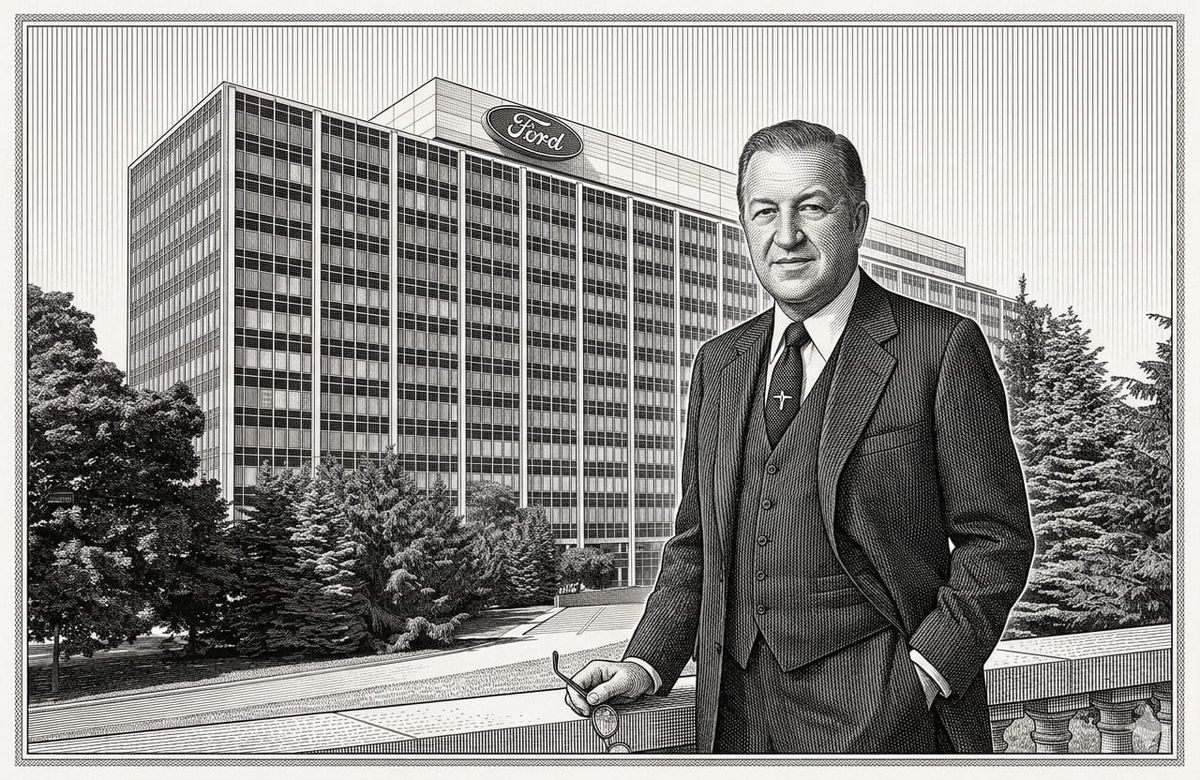
A century later, an American titan of industry put Disraeli’s maxim to its ultimate test. In February 1975, Henry Ford II, the powerful chairman of the Ford Motor Co. known as "Hank the Deuce," was arrested near Santa Barbara, California.
Police pulled Ford over for crossing the center line in a rented car and charged him with driving under the influence. Making the tabloid fodder juicer, his wife was traveling abroad, and Ford was accompanied by model Kathleen DuRoss.
When reporters later cornered the automotive mogul, demanding details about his arrest and his companion, Ford did not waffle, apologize, or litigate the facts. Instead, he smiled, shook his finger at the press corps, and confidently declared, "I haven't anything to explain. Never complain, never explain."
Detroit's corporate and social elite of the 1970s loved it. Rather than facing ostracism, Ford was greeted with a standing ovation by his fellow auto executives at an industry luncheon shortly after the incident.
The controversy faded, Ford kept his grip on the company, and he eventually married DuRoss.
Silence, it seemed, was golden.
Fast forward to the highly charged race for California's 7th Congressional District, where two Sacramento Democrats, incumbent Rep. Doris Matsui and Sacramento City Councilmember Mai Vang, appear to have enrolled in the Hank the Deuce school of public relations. Facing a bitter intraparty battle, both campaigns have retreated behind walls of calculated silence, banking on the idea that an unanswered attack eventually starves for oxygen.
Matsui has launched a full-frontal assault through television commercials and campaign mailers, targeting Vang’s attendance record. The ads highlight Vang’s absences from several local and regional boards in Sacramento County—duties required by her city council seat.
So far, Vang has not addressed the attendance critiques in any identifiable way through her social media channels or official press releases. By refusing to explain her calendar, Vang is betting that voters will view the attack as background noise rather than a disqualifying flaw.
Conversely, Vang has hit the incumbent where it helps with her progressive base, aggressively attacking Matsui for her personal wealth and her reliance on corporate campaign contributions. It is the kind of anti-establishment critique tailored to rally progressive and working-class families.
Matsui has offered no meaningful defense or explanation regarding her and her husband's wealth or her corporate backing, choosing instead to let establishment status shield her. In their own respective ways, both candidates have decided that the best response to a political punch is to act as though it never landed.
They are operating on Disraeli’s ancient calculus: explaining validates the accusation, and complaining looks like defeat.
Not long after Ford used the strategy, President Ronald Reagan famously reinforced it with a political axiom of his own, noting in his diaries that "if you're explaining, you're losing."
Both Matsui and Vang seem to understand that modern campaigns are won by controlling the tempo, not by validating an opponent's opposition research.
Whether this absolute adherence to silence will survive the social media demands of the 21st-century electorate remains to be seen. But as campaign mailers pile up on Sacramento doorsteps and television ads flood local airwaves, voters are left navigating a quiet vacuum of missing answers.
Starting next week, voters in California will start receiving ballots and casting their votes. In about a month, we will learn whose "never complain, never explain" voters found less offensive.