Flock’s surveillors don’t like being surveilled — Elk Grove residents know the feeling
That irony should resonate in Elk Grove
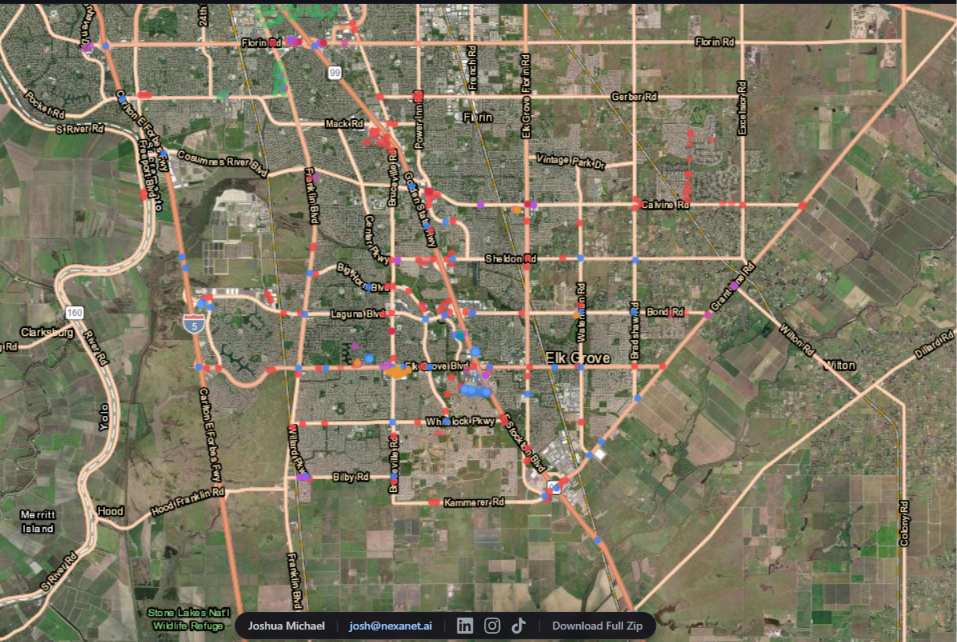
Flock Safety’s business helps police watch where people drive. But when a researcher mapped the company’s surveillance network, someone acting on Flock’s behalf sought to make that map disappear.
Apparently, the surveillor can dish it out but doesn’t appreciate scrutiny coming back its way.
story continued below

Cybersecurity researcher Joshua Michael created the Flock Surveillance Map using location information obtained from the company’s own records. The Intercept first reported the map on Sept. 24, describing more than 170,000 cameras and more than 130,000 supporting devices, including acoustic detectors and equipment connecting third-party cameras. Those totals represent different types of hardware, not 300,000 license plate readers.
Unlike crowdsourced camera maps, Michael’s project draws on a December 2025 snapshot of Flock’s database. The Intercept reported checking six randomly selected Arizona locations and finding cameras at each.
That spot check supported those locations, rather than independently verifying the entire inventory. Likewise, Elk Grove News randomly checked four locations in the city and verified their continued placement.
As Tom’s Hardware subsequently reported, Doppel, a company acting on Flock’s behalf, submitted a trademark complaint requesting the website’s removal. The complaint alleged that unauthorized use of Flock’s trademark could confuse customers, although Michael’s site carried a disclaimer disavowing affiliation.
The stated objection was trademark infringement; interpreting it as resistance to scrutiny is the obvious irony.
That irony should resonate in Elk Grove.
At the Aug. 26 City Council meeting, 21 speakers urged officials to end ALPR surveillance without replacing Flock with another vendor. Residents raised Fourth Amendment protections, cybersecurity, stalking, inaccurate matches, and the collection of information about people suspected of no crime.
At the Sept. 9 hearing, residents again challenged what they described as warrantless mass surveillance and requested an independent audit and cancellation of the contract. Mayor Bobbie Singh-Allen nevertheless dug her heels in and defended keeping the citizen surveillance program running, citing public safety.
Elk Grove is part of a nationwide backlash crossing political boundaries. The Associated Press reported candidates from both parties advocating bans or restrictions, with critics arguing that pervasive vehicle tracking amounts to unconstitutional surveillance.
Flock’s takedown request sharpens the question for Singh-Allen: Why should residents accept scrutiny of their movements when the company supplying that scrutiny seeks to limit public visibility into its own network?