Elk Grove City Council Debates Future of Old Town as Revitalization Effort Enters Another Chapter
Councilmember Kevin Spease questioned the rationale for imposing numerical caps on specific business types
ELK GROVE, Calif. — More than a quarter-century after Elk Grove incorporated, Elk Grove Mayor Bobbie Singh-Alle and her city council are again trying to determine what they want the city's historic commercial district to become.
During its July 22 meeting, the Elk Grove City Council received an update on the city's Old Town Special Planning Area and, more importantly, was asked by staff to provide policy direction on what type of district the council ultimately wants to create before a revised planning document is drafted.
The discussion marked the latest chapter in a long series of revitalization efforts dating back to the city's 2000 incorporation. Over the years, the city has pursued streetscape improvements, public art projects, branding campaigns, special events, planning studies and economic development initiatives intended to revive the historic corridor east of Highway 99.
Despite those efforts, the district has continued to struggle economically compared with the city's newer commercial areas west of Highway 99, where most of Elk Grove's younger, more affluent residents live and shop.
One of the most notable setbacks came with the city-backed financing of Slow & Low Barbeque. The city guaranteed a $400,000 taxpayer-backed loan to restaurateur Michael Hargis to open the restaurant in Old Town. The business closed after approximately six months, and the city continues efforts to recover the outstanding public money.
Senior Planner Kyra Killingsworth told the council the update process, originally started in 2020 before being delayed by the COVID-19 pandemic, has resumed and now requires council direction before staff prepares a draft plan.
The planning area covers about 90 acres containing roughly 200 parcels between Elk Grove Florin Road and Waterman Road, including the city's designated historic district.
Rather than presenting a completed vision, staff asked council members to help determine which characteristics should define the district.
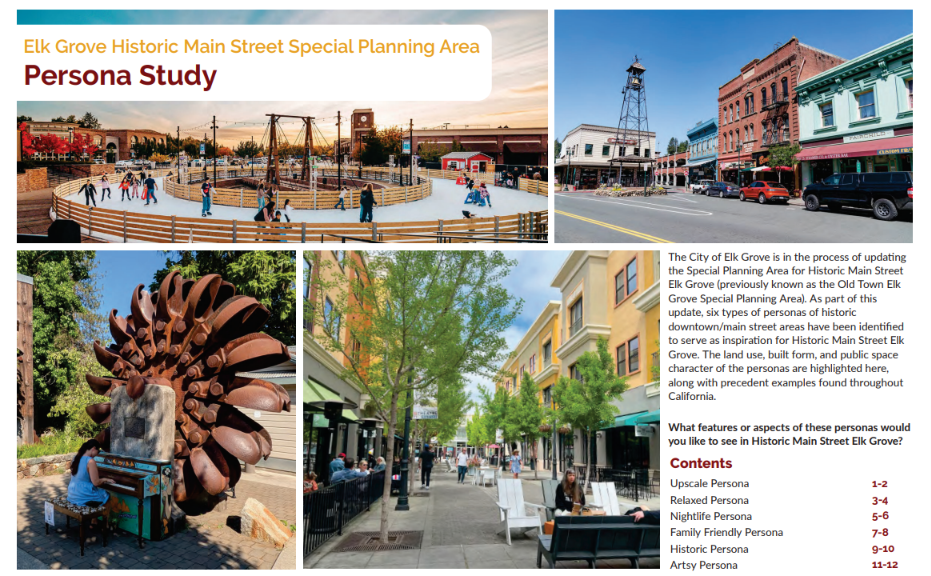
City outreach examined six possible "personas" modeled after successful historic districts elsewhere in California: artsy, family-friendly, historic, nightlife, relaxed and upscale. Public feedback found no clear favorite. Instead, residents generally preferred combining elements from several concepts, with arts-oriented and family-friendly features receiving the strongest support while preserving historic buildings remained a consistent priority. Traffic, parking and circulation concerns were raised regardless of the preferred vision.
Among the proposed planning changes are renaming the district from "Old Town" to "Historic Main Street," restricting additional automotive accessory businesses, limiting future personal service businesses such as salons and spas, revising alcohol-related business regulations, changing rules governing nonconforming businesses and streamlining mural approvals.
One proposal generated immediate discussion.
Staff recommended limiting future personal service businesses to avoid what it described as an overconcentration of salons and similar uses.
Councilmember Kevin Spease questioned the rationale for imposing numerical caps on specific business types.
"I have a difficult time when it comes back," Spease said. "I would like to see the reasoning specifically why some baseline standards" support limiting businesses, adding he was concerned about capping commercial uses based on what he viewed as an arbitrary number.
Mayor Bobbie Singh-Allen focused much of her questioning on staff's proposal to delegate mural approvals from the Planning Commission to the zoning administrator. She expressed concern that reducing review could allow culturally inappropriate artwork to be approved without sufficient public scrutiny.
Community Development Director Christopher "CJ" Jordan responded that murals would continue receiving review from the city's Arts and Creative Economy Commission and, when applicable, the Historic Preservation Committee before final action by the zoning administrator, preserving multiple opportunities for public input while shortening the approval process.
The council ultimately provided general support for staff's direction, with the revised planning document expected to return for public review and formal hearings over the next year.
The latest planning effort also comes against the backdrop of one of the city's costliest land-use decisions involving the special planning area.
In 2024, the City Council denied the proposed Oak Rose supportive housing project within the special planning area, citing concerns about protecting the character of Old Town. The State of California sued the city, alleging the denial violated state housing laws.
The litigation ended with Elk Grove agreeing to a settlement exceeding $10 million with the state and Long Beach-based Excelerate Housing Group, the project's developer, using taxpayer funds to resolve the dispute. That settlement remains one of the most expensive consequences of the city's efforts to regulate development within the historic district.