DeFlock Elk Grove audit challenges Flock camera practices
Flock’s rapidly expanding network faces resistance nationally from civil-liberties organizations, conservative privacy advocates, and residents distrustful of centralized government surveillance
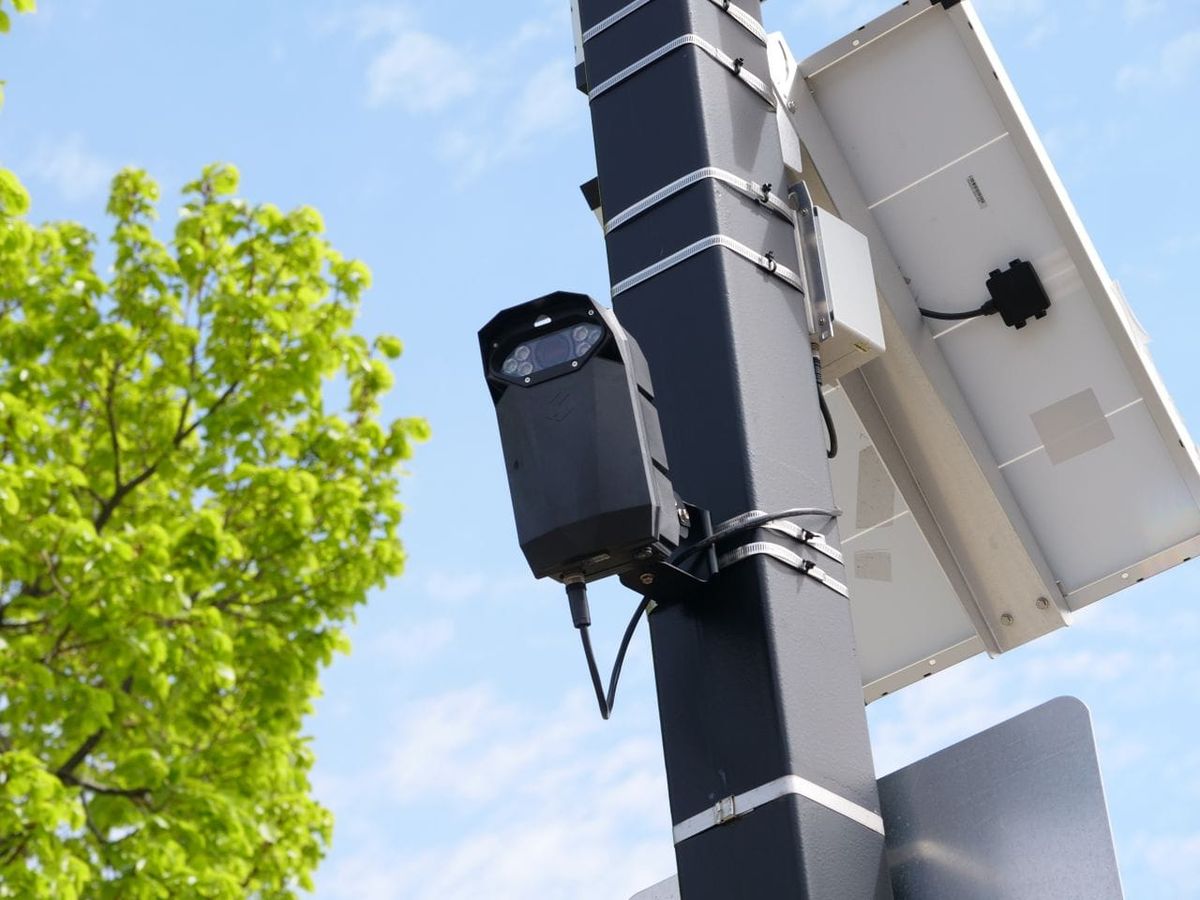
ELK GROVE, Calif. — An Elk Grove privacy group says records obtained from the city show millions of searches involving vehicle-location data collected by police license plate-reading cameras, including searches attributed to federal, out-of-state and private organizations that California law generally prohibits from receiving such information.
DeFlock Elk Grove said its review of records released under the California Public Records Act found that more than 3,600 organizations conducted about 8.3 million searches of data generated by Elk Grove’s Flock Safety automated license plate readers between 2021 and March 2026. Links to their data are below.
The Elk Grove Police Department conducted about 260,000 of those searches, or approximately 3%, while organizations outside the city accounted for the remaining 97%, according to the group.
DeFlock Elk Grove’s calculations, agency classifications and legal conclusions have not been independently reviewed. The underlying records are voluminous, and Elk Grove News has not verified the group’s analysis of each search. The organization has made the city-provided data and its methodology publicly available for others to examine (see below).
The findings nevertheless raise questions about the reach of a system that Elk Grove officials have consistently defended as an effective crime-fighting tool.
Elk Grove operates approximately 90 Flock cameras that photograph passing vehicles and record license plates, locations, times and distinguishing vehicle features such as color, model, dents, roof racks and bumper stickers. The information is retained in a searchable database regardless of whether a vehicle or its occupants are suspected of a crime.
DeFlock Elk Grove said its analysis found more than 1.3 million searches attributed to more than 3,200 federal and out-of-state organizations. It also identified about 4.3 million searches by 290 California agencies that the group said did not have data-sharing agreements with Elk Grove.
The group said the records indicate searches associated with an organization that appears to be U.S. Customs and Border Protection, private companies and unidentified accounts bearing labels such as “do not use,” “Org Name” and “decommissioned org.”
DeFlock also asserts that Elk Grove's information was shared with the Johnson County, Texas, Sheriff's Dept. After the U.S. Supreme Court overruled Roe v Wade in 2022, privacy and women's health advocates expressed concern the technology could be used to track women seeking abortions, and according to this widely reported story, that is what happened in Johnson County.
The group also said the city redacted the reasons given for all 8.3 million searches. By comparing some unique search identification numbers with records separately obtained from the city of Woodland, DeFlock Elk Grove said it found searches listing immigration enforcement, immigration-agency assistance and federal-agency assistance as reasons.
Those findings could raise issues under California laws restricting the disclosure of automated license plate-reader data to federal and out-of-state organizations and limiting state and local participation in federal immigration enforcement. They do not, by themselves, establish that Elk Grove police intentionally supplied information to immigration authorities or that a court would find a violation.
“We were shocked to learn that only three percent of searches involving data recorded in Elk Grove were made by the Elk Grove Police Department,” the group said in its Aug. 3 press release. “Our tax dollars are funding a system that is primarily used to track us from outside Elk Grove.”
Riverside and Orange County dispute
One portion of the audit appears to conflict directly with assurances given during a March 25 Elk Grove City Council meeting.
During that meeting, Real Time Information Center Manager Andrea Cortez said the department complied with California law, did not share data outside California and shared information only with appropriate in-state law enforcement agencies.
After residents raised concerns about access by the Riverside and Orange County sheriff’s offices, Cortez said Elk Grove did not share with those agencies.
“Those are actually entities we do not share with,” Cortez said. She added that Elk Grove shared with the Riverside and Orange county district attorneys’ offices, which she described as separate organizations with agreements on file.
DeFlock Elk Grove now says its analysis identified searches by both sheriff’s offices. That assertion has not been independently verified from the underlying data.
Police cite arrests and missing-person cases
Elk Grove Police have said all alerts and inquiries are reviewed by a person and require a reason code and a case number or call-for-service number. Cortez told the council that alerts are verified through additional law enforcement databases before officers act on them. The department retains Flock data for 30 days, she said.
Police reported receiving 1,548 Flock vehicle alerts from March 2021 through March 2026, with about 56 resulting in arrests. The technology was also used in more than 5,200 calls for service, according to the city’s presentation.
However, a recent Business Insider investigation found significant accuracy problems in nearby Roseville. The publication reported that Flock incorrectly read license plates in 71% of 1,427 stolen-vehicle or felony alerts reviewed from 2023 and 2024.
Roseville police said officers independently verified alerts and that the incorrect readings did not result in wrongful stops or arrests. Flock attributed some problems to Roseville’s older equipment and unusual camera placement.
The finding is relevant in Elk Grove because Cortez told the council that officers verify Flock alerts before taking action.
Council offers broad support
Singh-Allen and council members Rod Brewer, Sergio Robles, Kevin Spease and Darren Suen have uniformly supported the department’s use of surveillance technology.
During the March presentation, council members largely praised the Police Department and its Real Time Information Center rather than pressing officials for documentation independently confirming how data-sharing controls worked.
The council did not direct an independent audit, suspend the Flock contract or require the department to publicly reconcile its sharing list with the claims made by residents. No council member conducted a detailed public examination of the system’s error rate or requested a random sample of plate readings to test their accuracy during the presentation.
Singh-Allen offered strong support for the department and described its report as “fantastic,” saying she had the “utmost respect” for Elk Grove police.
Opposition crosses political lines
The dispute comes as Flock’s rapidly expanding network faces resistance nationally from civil-liberties organizations, conservative privacy advocates and residents distrustful of centralized government surveillance.
The ACLU has launched a national campaign urging communities to remove Flock cameras, warning that large databases of vehicle movements can reveal visits to homes, medical offices, religious institutions, political gatherings and other sensitive locations.
Military.com reported that opposition has crossed traditional ideological lines and that 39 Flock contracts were terminated during the first five months of 2026.
Recent investigations elsewhere have also documented officers accused of using Flock searches for personal purposes, including repeatedly tracking romantic partners or colleagues. An ex-Costa Mesa, Calif. police officer pleaded guilty to using Flock to track his mistress.
Other communities have experienced petitions, demands for public votes and vandalism targeting the cameras. Privacy advocates generally condemn property destruction while arguing that the backlash reflects growing concern over the scale and limited oversight of the technology.
DeFlock Elk Grove is calling on the city to end its Flock contract entirely.
For now, Elk Grove’s elected officials have shown no indication they intend to retreat from the technology, which costs taxpayers $1.6 million. Even as criticism grows locally and nationally, Singh-Allen continues to offer full-throated support for the city’s investment in police surveillance technology.
“Surveillance is not safety,” the group said. “Giving agencies, from the local police to the federal government, access to information about the movements of people all over America grants them far too much power.”