Why was Kevin Kiley at Sacramento’s Railyards ribbon-cutting?
Was Thursday’s appearance routine regional cooperation, or a chance to borrow some bipartisan scenery alongside Matsui?
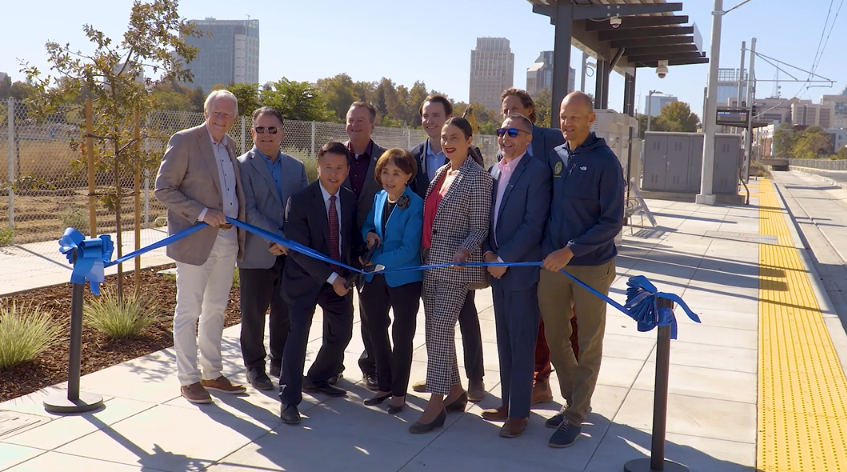
A new light rail station opened Thursday in Sacramento’s historic Railyards, bringing another transportation connection to a neighborhood being reshaped by housing, health care and development. Among those appearing alongside Rep. Doris Matsui was a congressman whose presence requires a little more explanation: Kevin Kiley.
continued below

Kiley currently represents California’s 3rd Congressional District, which includes Folsom, Orangevale, portions of Fair Oaks and other eastern Sacramento County territory. His district includes SacRT riders, but none of downtown Sacramento, where the new 7th & Railyards Station opened Oct. 15.
That does not mean he needs a passport to attend an event outside his district. Regional transportation benefits people who cross congressional boundaries every day, generally without consulting a redistricting map.
Still, his appearance raises reasonable questions: Was Kiley invited, and in what capacity? What role, if any, did he play in delivering this particular station?
SacRT’s announcement provides no answer about his invitation or involvement. It does, however, explain where the construction money came from.
According to the agency, the developer was responsible for funding and building the station, with support from a state Affordable Housing and Sustainable Communities grant and equity contributed by Downtown Railyard Venture. SacRT expressly said it did not fund the station’s construction, and the announcement identified no financing role for Kiley.
His broader transportation record adds another layer to the picture.
As an assemblymember, Kiley voted against Senate Bill 1, the 2017 transportation funding package that increased fuel taxes and vehicle fees to support roads, bridges and public transportation. The official Assembly Journal lists him among the 26 lawmakers who opposed its passage.
One program created by that law subsequently awarded SacRT $20.3 million for Gold Line double tracking intended to improve service frequency to Folsom. Kiley therefore opposed a funding law that helped deliver transit improvements to a community he represented.
He also voted against AB 180 and SB 198 in 2022, broader budget measures supporting substantial statewide transit investment. Those were votes against legislative packages, however, rather than separate votes rejecting individual SacRT grants.
Fairness requires acknowledging that his congressional record has been more supportive. Kiley backed federal appropriations packages containing transportation funding, and SacRT credited him, alongside other federal lawmakers, with supporting its nearly $77 million bus and maintenance facility grant in 2024.
That gives him a legitimate connection to the regional transit system. It still leaves his contribution to this particular downtown project unexplained.
Then there is the campaign backdrop.
Kiley is running against Democrat Dr. Richard Pan in the redrawn 6th Congressional District, a contest the Cook Political Report rates “Solid D.” Having repeatedly criticized Pan for refusing to debate, Kiley presumably appreciates opportunities to appear before voters in a setting where nobody gets a rebuttal.
Was Thursday’s appearance routine regional cooperation, or a chance to borrow some bipartisan scenery alongside Matsui? The available record doesn't establish his motive, and an unanswered invitation question isn't evidence he crashed the ceremony.
But voters can reasonably ask what he helped deliver before the cameras arrived. Ceremonial scissors, after all, come without a legislative voting record.