Matsui's Hasan Piker attacks may have backfired, with Elk Grove mayor adding fuel to the fire
Did Matsui's surrogates' attacks help generate additional attention and financial support for the very candidate they were intended to damage?

Sometimes in politics, an attack designed to damage an opponent produces precisely the opposite result.
That may be what is happening in the increasingly contentious congressional race between Rep. Doris Matsui and Sacramento City Councilmember Mai Vang.
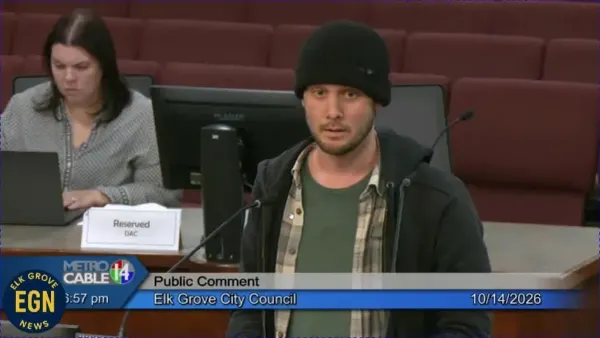
For more than a week, Matsui's campaign and several prominent political allies have expressed outrage over Vang's decision to appear on the livestream of controversial political commentator Hasan Piker. Among those criticizing Vang were Elk Grove Mayor Bobbie Singh-Allen, Assemblymember Stephanie Nguyen and Sacramento City Councilmember Lisa Kaplan.
The criticism was intended to raise questions about Vang's judgment and political associations. Instead, the controversy became a prominent subject during Vang's appearance yesterday on Piker's livestream, which also served as a campaign fundraiser.
And judging by the conversation, the attacks did little to discourage either participant.
The controversy becomes part of the show
Piker opened the interview by referencing the advertisements Matsui's campaign began airing after Vang's appearance was announced.
In a sarcastic exchange, he asked whether Vang would disavow him.
Vang declined to play along with the premise. Instead, she defended her decision to reach younger voters through alternative media platforms.
Vang said candidates have a responsibility to communicate with voters where they consume information, particularly younger voters who might not watch traditional television news or follow conventional political campaigns.
Later in the interview, Vang explained that college students and younger supporters had encouraged her to appear on Piker's program. Vang also acknowledged that it was these encounters with students that made her aware of Piker's program.
Her argument was straightforward: Appearing on someone's program does not necessarily mean adopting every opinion expressed by its host.
Piker and Vang also watched and discussed a Matsui campaign advertisement connecting Vang to controversial remarks attributed to Piker about the Sept. 11 terrorist attacks.
Piker criticized the advertising as resembling attacks traditionally associated with conservative commentators. Discussing his Turkish-American and Muslim background, he said he had encountered accusations portraying him as dangerous throughout his media career.
Vang questioned why her willingness to communicate with younger voters should be characterized as irresponsible.
The exchange turned what Matsui's campaign intended as a liability into another opportunity for Vang to explain her political strategy.
continued below

Elk Grove enters the conversation
Although the livestream was largely focused on national policy and the congressional contest, Elk Grove was mentioned in two notable exchanges.
The first involved automated license plate readers manufactured by Flock Safety.
Piker specifically referenced approximately 90 cameras operated by Elk Grove and raised concerns about privacy, surveillance and law enforcement access to collected information.
Vang responded that she supports banning Flock surveillance technology, saying privacy protections are increasingly important as technology advances.
That position creates an interesting local contrast.
Elk Grove Mayor Bobbie Singh-Alle and her four city councilmen have defended the continued use of the controversial mass surveillance system, while Vang, the candidate Singh-Allen has publicly criticized, advocated eliminating it.
The second mention came during a discussion of housing affordability. Piker included Elk Grove among Sacramento-area communities facing rising housing costs and pressure from corporate landlords.
Vang responded by supporting stronger federal tenant protections, a national housing trust fund and incentives to construct affordable housing.
What about Singh-Allen, Nguyen and Kaplan?
Perhaps the most interesting omission from the interview was the absence of any specific discussion of the three local elected officials who had publicly criticized Vang.
Neither Singh-Allen, Nguyen nor Kaplan was individually mentioned in the supplied transcript.
Their objections were addressed only indirectly through the broader discussion of Matsui's campaign advertisements and the criticism surrounding Vang's appearance.
That omission is noteworthy because Singh-Allen's participation in the attacks created a controversy of its own.
As Elk Grove News previously reported, Vang supporter Megan Sapigao challenged the mayor's criticism by pointing to Singh-Allen's own favorable Facebook comments about Zohran Mamdani, another progressive political figure.
The contradiction was difficult to overlook.
Singh-Allen had previously praised Mamdani's political message, yet joined criticism of Vang for appearing on a program popular among progressive voters. The mayor's selective enthusiasm for progressive politics opened her to accusations of inconsistency.
Rather than weakening Vang, Singh-Allen's involvement gave Vang supporters another opportunity to challenge the political establishment surrounding Matsui.
For a mayor who regularly uses social media to promote her activities and political relationships, the episode illustrated how quickly those same platforms can expose contradictions.
A fundraiser amid the controversy
The appearance also produced a fundraising benefit for Vang.
During the interview, Piker announced that the fundraiser had reached approximately $42,200 and encouraged viewers to help meet a $50,000 goal.
The YouTube archive's description states that the livestream ultimately reached that goal, although that final figure is not independently verified by the supplied interview transcript.
For a challenger who has repeatedly described being substantially outspent by Matsui, the reported fundraising total represents a potentially meaningful boost.
It also raises an uncomfortable question for Matsui's campaign: Did its attacks help generate additional attention and financial support for the very candidate they were intended to damage?
The answer cannot be established from one livestream, but the timing and fundraising claims certainly make the question worth asking.
Plenty of controversial positions
Anyone expecting Vang to moderate her positions, as many political consultants advises her to do after her first place showing in the June primary, in response to the attacks would have been disappointed.
During the interview, she reiterated her support for abolishing Immigration and Customs Enforcement, ending Flock camera contracts, Medicare for All, restrictions on artificial intelligence data centers and ending U.S. military assistance to Israel.
In a rapid-fire exchange, she also supported sanctioning Israel, ending the U.S. embargo on Cuba, canceling student debt and free public college. Those positions are not without political risk, particularly in a congressional district that includes more Republican voters following redistricting.
Vang also described the situation in Gaza as genocide and criticized Matsui's record on immigration enforcement funding and corporate campaign contributions.
The interview made one thing unmistakable: Vang has no intention of repositioning herself toward the political center simply to attract conservative voters.
The political calculation
One of the most revealing moments came near the conclusion of Vang's interview.
After watching Matsui's latest advertisement, Piker suggested that its intended audience was not necessarily Democratic voters but Republicans.
Vang acknowledged that the redrawn 7th District includes a larger Republican electorate and suggested Matsui's campaign was counting on their support.
Vang said Democratic political consultants had advised her to move toward the center or right following her primary victory.
She rejected that advice.
Instead, she argued that affordability, health care and political corruption are issues that can appeal to voters regardless of party affiliation.
As Elk Grove News previously examined, Matsui's decision to make Piker a prominent campaign issue represents a calculated attempt to define Vang through her association with a controversial commentator.
Whether that approach succeeds remains an open question.
But there is already evidence of an unintended consequence.
Vang received nearly an hour of exposure to Piker's audience, an opportunity to explain her positions at length, and a fundraiser that organizers said reached $50,000.
Meanwhile, the political allies who joined the attacks, including Elk Grove's mayor, became targets of widespread criticism themselves.
Singh-Allen's participation appears particularly poorly calculated. Rather than reinforcing Matsui's argument, it invited renewed scrutiny of the mayor's own political statements, alliances and hypocrisy.
In politics, surrogates are supposed to help their preferred candidates, not create additional distractions. Singh-Allen created a distraction.
With ballots already in voters' hands, Matsui and her supporters may eventually discover whether their attacks persuaded undecided voters.
For now, however, the Piker controversy has produced something the Matsui campaign almost certainly did not intend: another platform for Vang, additional campaign contributions and an opportunity for the challenger to portray herself as standing against an entrenched political establishment.
And for Mayor Singh-Allen, it offers a reminder that political attacks can travel in both directions.
Sometimes the politician throwing the punch ends up providing the opponent with the best publicity.