Why Bicycle Safety Became a Political Issue: What It Means for Elk Grove Cyclists, Pedestrians
Unlike many policy debates, bicycle safety would seem to be an issue that transcends partisan politics
During election years, candidates for public office inevitably promise to make communities safer. Challengers pledge to fix what they say is broken, while incumbents point to crime statistics, new police officers, or upgraded equipment as proof they have delivered.
In local elections especially, "public safety" has become almost synonymous with law enforcement.
But public safety extends far beyond police cars, fire engines, and emergency response times. It encompasses the everyday infrastructure that determines whether residents can travel safely through their community, whether emergency responders can reach those in need, and whether children, commuters, and seniors can navigate city streets without unnecessary risk.
In Elk Grove, for example, public safety includes the long-standing issue of rail crossings east of Highway 99. Freight trains have repeatedly blocked intersections on the city's neglected east side for extended periods, delaying motorists and, more importantly, emergency vehicles responding to calls.
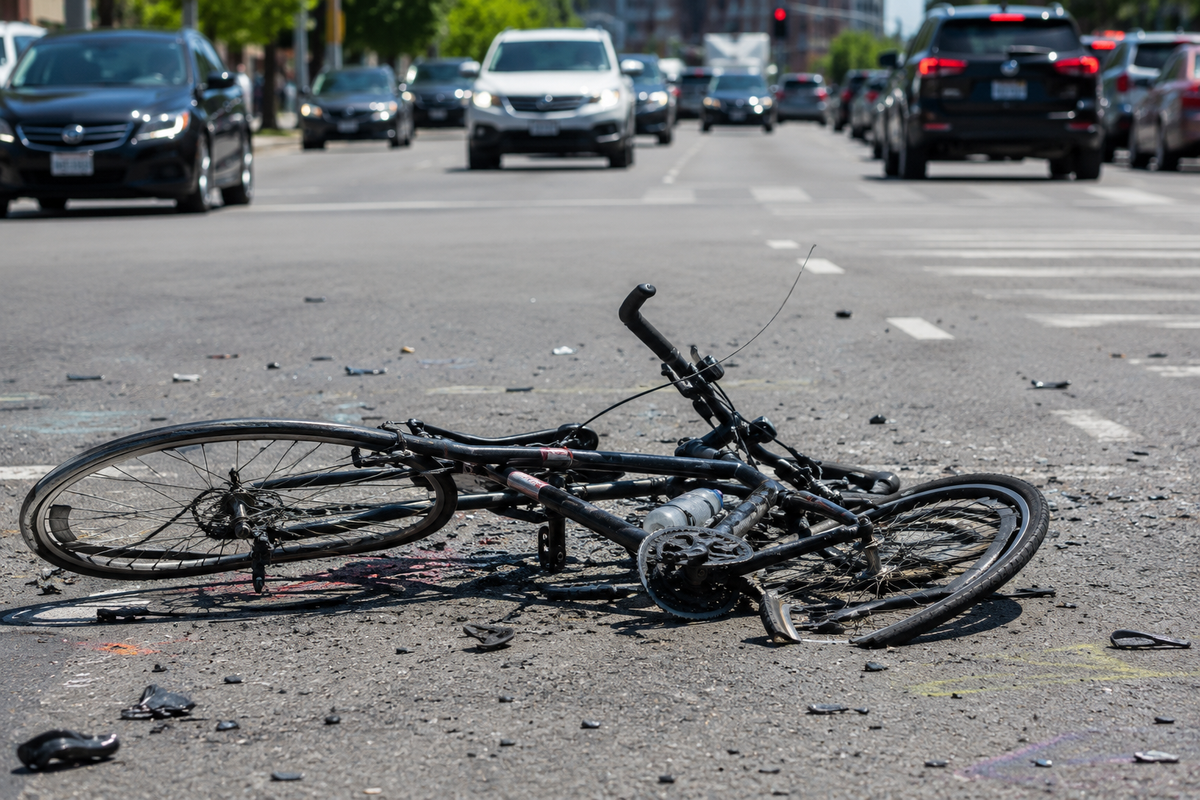
Another equally important aspect of public safety involves those who travel outside the protection of an automobile. Pedestrians and bicyclists share the same streets as increasingly distracted, impatient, and sometimes reckless motorists.
Speeding has become commonplace, red-light running is almost expected at some intersections, and the consequences can be devastating.
Like many cities, Elk Grove has experienced fatalities involving pedestrians and bicyclists, including tragic hit-and-run collisions.
Unlike many policy debates, bicycle safety would seem to be an issue that transcends partisan politics. Democrats, Republicans, and Independents ride bicycles.
Parents teach their children to ride bicycles, often so they can get to school. Commuters use them to get to work, and recreational cyclists use them to stay healthy, while others rely on them because they cannot afford a car or are physically unable to drive.
Safe streets benefit everyone, regardless of political affiliation.
That is why recent actions by the Trump administration are striking. What had traditionally been viewed as a transportation safety issue has increasingly become entangled in the nation's broader ideological battles over diversity, equity, and inclusion, commonly referred to as DEI.
The administration has argued that many federal transportation initiatives emphasizing bicycle lanes, pedestrian improvements, and equitable access to transportation were rooted in DEI principles it opposes. As part of that broader effort, federal agencies have reviewed, revised, and in some cases removed guidance and informational materials that referenced equity or environmental justice in transportation planning.
According to an NPR report, the U.S. Department of Transportation has also removed bicycle safety information from portions of its public-facing websites. While the administration has characterized these actions as part of a broader effort to eliminate what it considers ideological content from federal agencies, transportation advocates argue that removing safety resources could make it more difficult for state and local governments, planners, and the public to access information intended to reduce crashes and fatalities.
The irony is difficult to ignore.
A subject that once united communities around the simple goal of preventing injuries and saving lives, and maybe even relieving some traffic congestion, has become another front in America's culture wars. Whether one views bicycle infrastructure as smart transportation policy, environmental stewardship, fiscal responsibility, or simply common sense, the objective remains the same: ensuring that people who choose to walk or ride a bicycle arrive home safely.
Public safety should not depend on whether someone travels in an EV, a pickup truck, a sedan, or on two wheels. The pavement beneath them is the same, and so are the consequences when safety takes a back seat to politics.