Iran Strikes Expose Democratic Divide: Doris Matsui and Mai Vang Clash Over War Powers, Israel Aid and Party Leadership
The contrast underscores broader generational and ideological tensions within the Democratic Party

The Trump administration’s strikes against Iran have exposed sharp divisions within the Democratic Party, including in California’s 7th Congressional District, where veteran U.S. Rep. Doris Matsui and her primary challenger, Sacramento City Councilwoman Mai Vang, offered markedly different responses.
Matsui, a longtime Democratic lawmaker aligned with the party’s establishment wing, condemned the military action while also reiterating longstanding support for Israel and efforts to prevent Iran from acquiring nuclear weapons.
“This is an illegal and irrational attack. The President is risking American lives and dragging us toward a broader conflict with no clear strategy and no clear end. Americans do not want this war,” Matsui said in a statement released Saturday.
While criticizing President Donald Trump’s authority to launch the strikes without congressional approval, Matsui also condemned Iran’s government, describing it as a regime that “has denied its people basic rights, imprisoned and tortured its own citizens, and fueled violence through terrorist proxies.”
“The United States must prevent Iran from obtaining a nuclear weapon,” she said, adding that “lasting change must come from within — and U.S. military intervention would only further destabilize the region.”
Matsui pledged to support a War Powers resolution when the House reconvenes, asserting that “only Congress has the authority to declare war.”
Vang, who is mounting a primary challenge from the left, struck a more confrontational tone, targeting both Trump and Democratic leadership.
“The same political establishment that just voted to give Israel an additional $3.3B in weapons is now SHOCKED that Israel is using those bombs to help Trump drag us into another violent conflict and pursue regime change,” Vang said in a social media post.
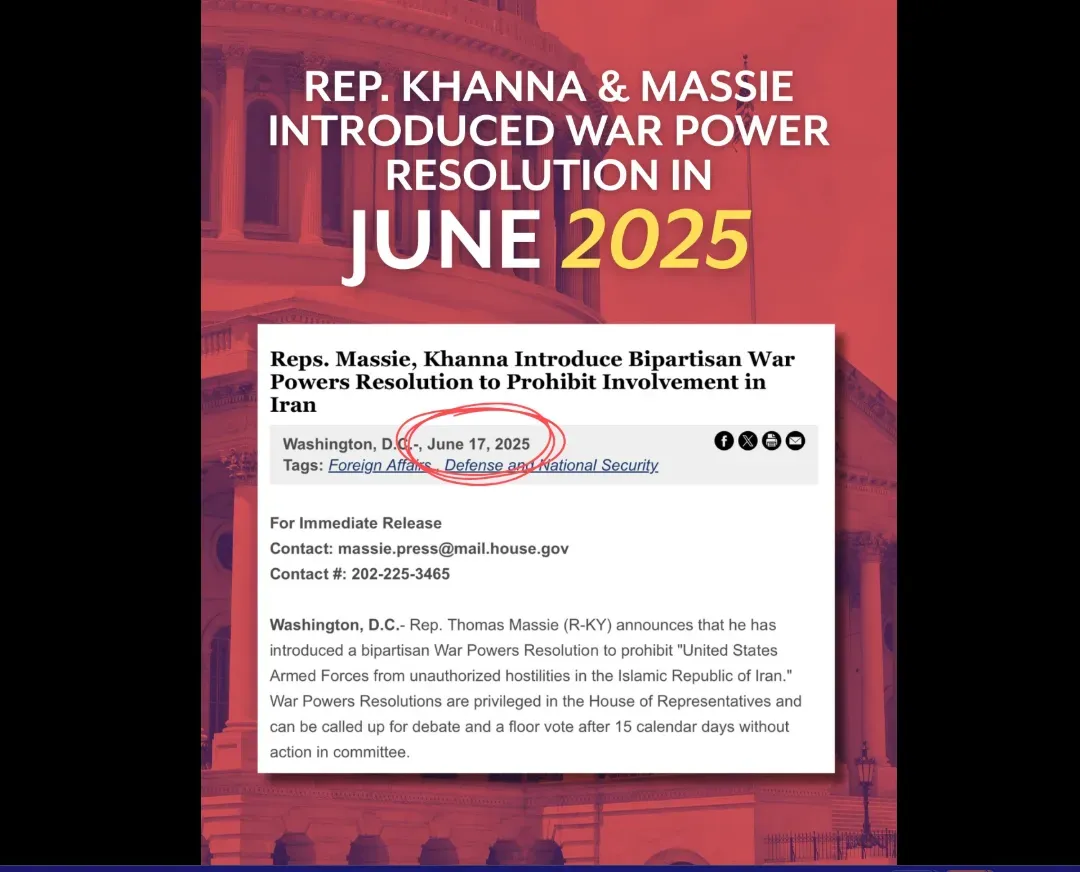
She criticized Democratic leaders for failing to rally behind a War Powers resolution introduced in June 2025 by Reps. Ro Khanna and Thomas Massie, arguing that party leaders waited too long to act.
“We have the same failed leadership — waiting until Trump abuses his power to finally weakly act. VOTE THEM OUT! We need a new generation of leaders in Washington,” Vang wrote.
The contrast underscores broader generational and ideological tensions within the Democratic Party. Matsui, first elected in 2005, has generally supported U.S.-Israel security cooperation and has aligned with party leaders such as Senate Minority Leader Chuck Schumer and House Democratic Leader Hakeem Jeffries.
Vang represents a younger, progressive wing less attached to traditional U.S.-Israel alliances and more critical of military aid. She has also faulted Matsui for not embracing policies such as Medicare for All and other progressive proposals championed by the party’s left flank.
The Iran strikes are the latest flashpoint in a primary contest that reflects a larger debate within the Democratic Party: whether to maintain establishment foreign policy positions or pivot toward a more skeptical view of American military engagement abroad.