When Doris Matsui Says Times Are Tough, She Also Has a Request: Can You Spare $10?

"Will you chip in $10, $25, or whatever you can today?"
Share
When Doris Matsui Says Times Are Tough, She Also Has a Request: Can You Spare $10?

Receiving emails from political candidates seeking campaign donations in a hotly contested race is nothing out of the ordinary.

The hotly contested and closely watched contest for California's 7th Congressional District between incumbent Rep. Doris Matsui and challenger Sacramento City Councilmember Mai Vang is a prime example. There isn't a day that goes by when the Matsui campaign isn't sending an email soliciting donations, while Vang is as likely to make her pitches via the various social media platforms her campaign inhabits as through email solicitations.

That's what makes yesterday's emails from the candidates interesting. Vang makes a straight pitch, while Matsui's letter, from our perspective, has a touch of irony (See both letters below).

Vang's email is refreshingly candid. It says, in effect, "We're getting outspent. We don't take corporate PAC money, so if we're going to compete, we need grassroots donors."

Matsui's email follows a different script. First, it reminds readers that the cost of living is rising and families are doing more with less. Then, after establishing that everyone's wallet is already on life support, it asks readers to open it one more time.

To be fair, every politician asks for money. It is practically a constitutional requirement by now.

Somewhere between the First Amendment and the Commerce Clause is an unwritten amendment reading, "No campaign shall ever have enough cash."

Still, the contrast between Tuesday's emails was striking.

Vang's campaign acknowledges it trails Matsui financially. The email says Matsui has approximately $467,000 on hand compared with about $271,000 for Vang.

It explains that because the campaign does not accept corporate PAC money, grassroots donations are "the whole engine" behind its operation. It is a classic underdog appeal: We know we're behind. Help us catch up.

Matsui's email takes a different route.

It begins by noting that "the cost of living keeps rising" and that families are "being asked to do more with less." It highlights her work on equal pay, the CHIPS and Science Act, transportation funding, flood protection and clean water projects before arriving at the inevitable conclusion familiar to anyone with an email account:

"Will you chip in $10, $25, or whatever you can today?"

There is nothing unusual about the request. Campaigns survive on donations.

The irony comes from who is making it.

Rep. Matsui has served in Congress for two decades, has built one of Northern California's strongest fundraising networks, enjoys the support of numerous political action committees, and, according to her most recent congressional financial disclosures, is herself a millionaire.

That creates a slightly awkward visual.

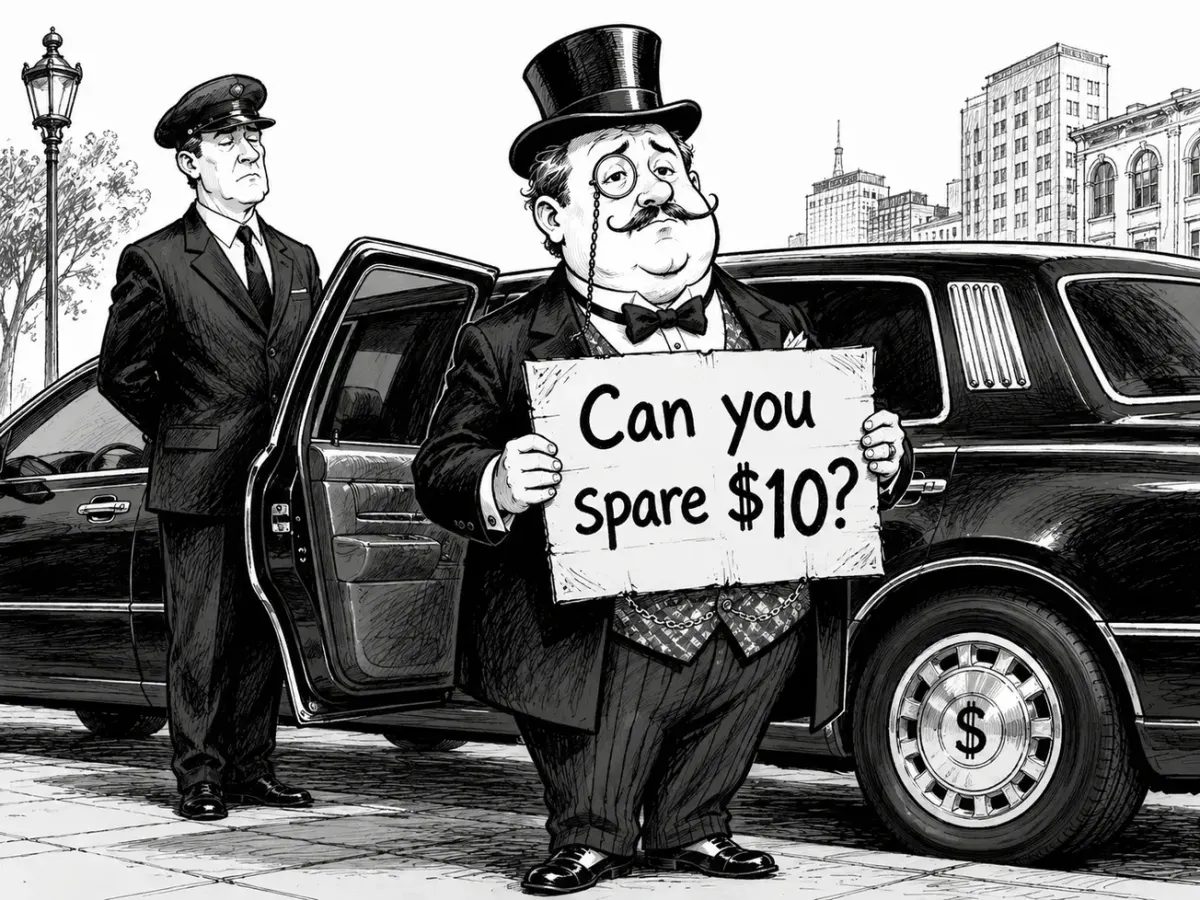
Imagine Warren Buffett walking through the neighborhood with a coffee can asking if anyone could spare enough change to buy lunch.

Or perhaps picture someone pulling into a food bank parking lot in a Bentley and asking whether anyone has an extra loaf of bread.

Granted, those comparisons exaggerate the point. But they illustrate why Matsui's email produces an involuntary smile.

Meanwhile, Vang's appeal is almost refreshingly blunt. She doesn't claim the campaign is flush with cash. Quite the opposite.

She openly admits Matsui has the financial advantage and argues that refusing corporate PAC money means ordinary donors are the campaign's lifeline. Whether voters agree with that philosophy is another matter, but at least the fundraising rationale follows a certain internal logic.

The two emails ultimately tell readers something beyond the request for money.

One campaign is selling experience, accomplishments and incumbency. The other is selling scarcity.

And in politics, scarcity can sometimes be an effective fundraising strategy.

Especially when your opponent keeps reminding everyone how expensive everything has become before asking whether you have ten dollars to spare.

Matsui

Vang