Commentary: Is ‘I don’t even know who they are’ a plausible defense for Doris Matsui’s campaign contributions?
Is “I don't even know who they are” really a plausible defense?
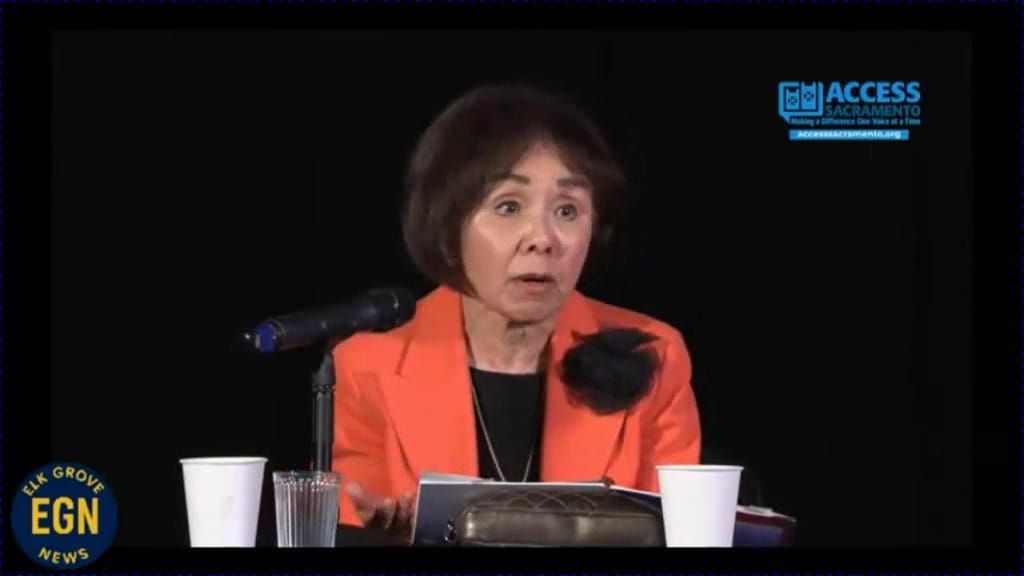
A transcript of the debate exchange cited in this story is available below along with a video
One of the more revealing exchanges in the August 27 congressional debate between Rep. Doris Matsui and Sacramento City Councilmember Mai Vang had nothing to do with legislation, constituent services, or even their policy differences.
It was about money — specifically, who gives it to their campaigns and whether candidates should know where it comes from.
For Vang, who is challenging fellow Democrat Matsui to represent California's 7th Congressional District, campaign money — and particularly corporate money — has become one of the pillars of her candidacy.
During the Sacramento debate, Vang put that issue directly to Matsui.
“Congresswoman, this cycle you have taken over 40,000 [dollars] from ICE contractors and corporations,” Vang said, asking how immigrant families could trust Matsui when her campaign was supported by companies Vang said profit from family separation.
Matsui responded by invoking something deeply personal: her family's experience during World War II.
Matsui noted that her parents were taken away by the U.S. government and placed in an internment camp. She said she knew what her parents and grandparents endured and objected to the implication that accepting the contributions meant she did not care about immigrant families.
That is an understandable response to an accusation questioning her commitment to people affected by government immigration policies.
But then came the answer that raises a different question.
Referring to the contributions Vang had raised, Matsui said Vang was bringing up “something that I am unaware of,” before suggesting Vang probably had contributions in her own campaign account that she did not know about.
Vang pressed the point.
“Do you think elected officials should take money from ICE contractors and corporations?” she asked.
“Of course not,” Matsui responded.
There was brief confusion as Matsui referred to Vanguard and index accounts before Vang clarified that she meant direct contributions to Matsui's campaign.
Matsui's response was striking.
“I don't even know who they are,” she said. “Don't know who they are.”
And that may be the most important part of the exchange.
Is not knowing who contributes to your congressional campaign a plausible defense?
Vang's argument is particularly tailored to progressive and Democratic voters who have grown increasingly skeptical of corporate influence in politics. She is not merely arguing that Matsui accepts contributions from interests some voters may find objectionable. She is trying to make the source of campaign money itself a distinction between the two Democrats.
Matsui later offered a broader defense, saying, “I can't be bought,” and pointing to support she receives from working people, including firefighters, nurses, teachers, plumbers and electricians.
Vang again returned to corporate contributions.
She claimed more than half of Matsui's contributions came from corporations or corporate PACs while saying 95% of her own contributors were small individual donors. Vang then posed an obvious follow-up: Would Matsui return the corporate PAC money?
Matsui did not say she would.
Instead, she pointed to her work on behalf of constituents and rejected the suggestion that campaign contributions affect her decisions.
“I don't sell out at all for anything at all,” Matsui said.
That may very well be true.
There is an important distinction between accepting a campaign contribution and being controlled by the contributor. A contribution, by itself, does not establish that an elected official changed a vote, position or official action.
But that isn't quite the question Vang was asking.
Vang's challenge was whether candidates should accept certain corporate contributions in the first place — and whether voters should consider the sources of campaign money when deciding which Democrat they want representing them in Washington.
On that question, Matsui's defense seemed to be twofold: She cannot be bought, and she did not know about at least some of the contributions Vang cited.
For voters, particularly progressive Democrats suspicious of corporate money in politics, the second argument presents an interesting question.
Is ignorance of who is financing your campaign a defense — or does it create another problem?
Matsui is an experienced member of Congress with a substantial campaign operation. Voters can reasonably decide for themselves whether a candidate should personally recognize every donor appearing on a campaign finance report.
But once an opponent publicly identifies contributions and challenges the candidate to reject or return them, lack of prior knowledge is no longer the issue.
The candidate knows about them now.
And when Vang gave Matsui the opportunity during the debate to say she would return the corporate PAC money, Matsui did not make that commitment.
For Vang, that exchange neatly reinforced one of the central themes of her campaign.
For Matsui, it leaves voters with a question that may linger longer than the debate itself:
When challenged about potentially troublesome campaign contributions, is “I don't even know who they are” really a plausible defense?
Addendum: Matsui-Vang debate exchange on campaign contributions
The following is a lightly edited transcript of the exchange between Sacramento City Councilmember Mai Vang and Rep. Doris Matsui during their August 27, 2026, congressional debate in Sacramento. The transcript has been edited for formatting and clarity while preserving the substance of the candidates' remarks.
Mai Vang: Congresswoman, this cycle you have taken over 40,000 from ICE contractors and corporations. How can our immigrant families trust you when your campaign is being supported by the very people and insurance and the companies that are actually profiting from the pain families through separation?
Doris Matsui: You know, I keep saying this, that my parents were taken away by our own government and put in an internment camp. I would not do anything to hurt anybody.
So I feel very frankly that to say that is really like, “Oh, you don't care.” I care. I care. I know what my parents went through. I know what my grandparents went through. They had to work hard to start their life again.
And so to throw this in my face when I really understand what it means to be a part of this country and honor it and understand what it really means to make sure that people get connected in this country — I feel very strongly about this.
People know that, and I understand how it is to bring people together. And to bring up something that I am unaware of — and, you know, maybe you can check your records more easily than I can — but I have a sense that you have things in your budget, too, or your campaign contributions that you're unaware of, too.
[54:58] Mai Vang: Can I — can I — 20 seconds?
Mai Vang: Can I respond to that? I mean, Congresswoman, do you think elected officials should take money from ICE contractors and corporations? I think that's important.
Doris Matsui: You know, of course not. But the thing is, is that, you know, these things are in the Vanguard accounts. They're index accounts. We can't control them.
Mai Vang: Oh, no. These are contributions to your campaign.
Doris Matsui: Well, I don't even know who they are. Don't know who they are.
Moderator: I mean, really, please, please, please. No. Please.
Moderator: Okay. Okay.
Moderator: Any responses? We go to the next question. Okay. Um, you have another question?
Mai Vang: I have a question I'm gonna ask.
Moderator: No, you have another question to ask if you want to ask it or if you want to respond. Respond.
Doris Matsui: You know, please respond. We could talk about what's in our campaign accounts forever and ever. But, you know, she can go look at the FEC, and you know what?
I can't be bought. You know, I can't be bought by anybody. People know that. I'm supported by working families, by working people. They support me whether they are firefighters or nurses or teachers, plumbers, electricians. They support me and stand by me.
Mai Vang: Congresswoman, more than half of your contributions actually come from corporations, corporate PACs.
My contributors, 95% are small individual donors. I mean, if you don't care of taking money and you say that working families and unions support you, would you return all the corporate PAC money that you've received, thousands of dollars? Half of your war chest is actually funded by corporations?
Doris Matsui: I have to say that, you know, I work really hard, just like you work hard, right? And I make sure that I do the work that's necessary for my constituents.
And I have done, I think, you know, delivered plenty here — levees, transit, health care. I mean, these are things that are important to people, and I don't take — and I don't do this for any — I don't sell out at all for anything at all. Okay.