CA oil drilling permits skyrocket in 2026's first quarter; majority are for Chevron wells
The industry has to use more dangerous and "dirtier" techniques to extract oil out of the ground as they deplete the available crude oil in the ground
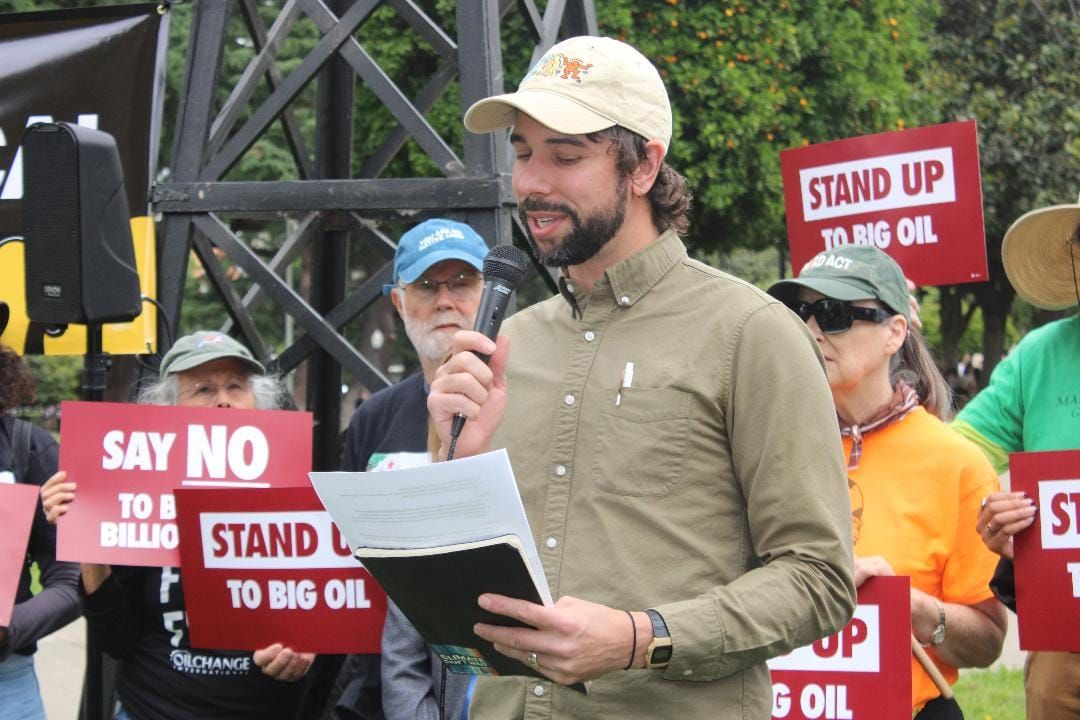
Los Angeles, CA – For those folks who still think California is the "green" and "progressive" leader of the nation, I've got some disturbing news for you.
The approval of new oil drilling permits by CalGEM, the oil and gas regulator in California, surged dramatically in the first quarter of 2026 with a total of 245 new permits approved. Of those, 190 were permits to drill new wells, while the rest were permits for new drilling work on existing wells, according to a new report from Consumer Watchdog and FracTracker Alliance.
That's a 6,233 percent increase from last year, when just 3 permits for new drilling work on existing wells were permitted!
Out of the 190 permits to drill new wells, the overwhelming majority—154 permits—were to drill new wells authorizing "dangerous oil extraction techniques" known as “Enhanced Oil Recovery” (EOR), the groups reported. No new permits for new EOR wells were approved in 2025, while 33 were approved in 2024.
Counting through May 9, a total of 320 new drilling permits have been issued this year. All but one of the permits – for a gas storage well in Contra Costa County that is exempted from the state’s 3,200-foot health protection zone between drilling and communities – were issued to drill in Kern County.
And guess who led all operators through May 9, accounting for 133 of the new drilling permits issued?
It was none other than Chevron, the target of an international boycott by environmental justice, indigenous and human rights groups because of the corporation's long record of environmentally destructive practices and complicity with human rights rights violations from Richmond, California, to Gaza and the Ecuadorian Amazon.
Aera Energy LLC followed Chevron with 88, Sentinel Peak Resources California LLC with 41, and California Resources Production Corporation with 30. To make things even worse, Chevron was approved the highest count of new drilling permits for EOR wells, making up 86% of their permits.
Enhanced oil recovery permits are an environmental justice disaster
Enhanced oil recovery (EOR) techniques of oil and gas drilling use energy intensive cycles of steam injection or steam flooding to pry viscous oil out of the ground as oil production ebbs in the state, the groups revealed.
In other words, the industry has to use more dangerous and "dirtier" techniques to extract oil out of the ground as they deplete the available crude oil in the ground. Since I started covering this issue, California has declined from third largest oil producer in the nation to the seventh largest producer.
Kyle Ferrar, Western Western Program Director for FracTracker Alliance explained the impact of these techniques.
"Injections of produced oil wastewater from EOR into aquifers not properly exempted from drinking-water protections can contaminate water necessary for future human consumption as climate change unfolds," said Ferrar. "Drilling injection wells next to old wells in aging, overdeveloped fields risk spills that can last for years as well as eruptions of oil, rock and mud that threaten the air, water, and oilfield workers."
“California just handed Kern County to the oil industry on a platter,” continued Ferrar. “Heavy oil extraction using enhanced recovery techniques is among the dirtiest drilling there is, and the state is approving it at a pace we haven’t seen in years.”
A reversal of climate progress in California
The numbers released today reveal a sharp reversal of a steep decline in new drilling permits in the last few years.
“Governor Newsom’s reversal on drilling, even as he claims national climate leadership, is blatantly hypocritical,” said Consumer Advocate Liza Tucker.
SB 237 (Grayson), backed by Governor Newsom and passed last year despite strong opposition by environmental justice, public interest and community groups, allows Kern County to permit tens of thousands of new wells over the next decade under a streamlined local environmental review, bypassing the stricter, site-specific scrutiny of the California Environmental Quality Act (CEQA). The streamlined environmental review allows up to 2,000 new oil drilling permits per year.
Table 1. First Quarter 2026 Permit Counts. The table compares the permit counts for the first quarter of 2026 with that of the previous year.

Analysis of CalGEM permits courtesy of FracTracker Alliance
For a visualization of permits in California, go to NewsomWellWatch.com, a website jointly operated by Consumer Watchdog and FracTracker Alliance.
Table 2. New drilling permit counts by operator from January 1 through May 9, 2026.
| Operator Name | New Drill Permit Count (1/1/26 – 5/9/26) | EOR Wells – New Drill Permit Count |
| Chevron U.S.A. Inc. | 133 | 115 |
| Aera Energy LLC | 88 | 31 |
| Sentinel Peak Resources California LLC | 41 | 40 |
| California Resources Production Corporation | 24 | 13 |
| Crimson Resource Management Corp. | 18 | 15 |
| California Resources Elk Hills, LLC | 6 | |
| Southern California Gas Company | 6 | |
| Valley Resources, LLC | 3 | |
| Pacific Gas and Electric Company | 1 | |
| Totals | 320 | 214 |
The Dirty Secret of 214 Permits
According to FracTracker Alliance, EOR carries a staggering environmental cost.
"California’s EOR-derived oil has an extremely high carbon footprint(opens in new tab), potentially negating any climate argument for local production. EOR is also highly water-intensive, consuming billions of gallons of freshwater (opens in new tab)in a state plagued by drought.
"The California Geologic Energy Management Division (CalGEM) and State Water Board are in the process of expanding an “aquifer exemption”(opens in new tab) at the Kern River Oil Field from protected status under the federal Safe Drinking Water Act. Chevron primarily owns and operates the field, and the exemption would allow expansion of EOR while further contaminating a potential future source of drinking water.
"Drilling new wells to extract dirty oil is economically viable only because of favorable permitting and lack of bonding up front to ensure wells are plugged at the end of their economic lives(opens in new tab).
"Most of the oil produced in California is considered heavy crude. Wells that produce heavy crude are specifically exempt from leak detection and repair requirements(opens in new tab), meaning they can vent methane and air toxics without recourse."
Environmental justice advocates: more permits will lead to an acceleration of health crisis
Meanwhile, environmental justice advocates spoke out about the horrendous health and environmental consequencies of the greenlighting of new oil drilling permits in Kern County.
“More permits without stronger protections isn’t progress, it is an acceleration of the same health crisis of illnesses from asthma to cancer we have been documenting for years,” said Cesar Aguirre, Associate Director at Central California Environmental Justice Network based in Fresno that works extensively in Kern County.
“California’s approval of 245 oil and gas permits in the first quarter of 2026 alone–154 of them for heavy oil extraction in Kern County–is more than the state issued over the previous two years combined. These heavy oil operations are explicitly exempt from the state’s leak detection and repair requirements, meaning that most of these newly permitted wells face little to no enforceable emissions oversight," said Aguirre.
“The San Joaquin Valley oil basin in Kern County exhibits some of the highest methane leakage and carbon intensity rates in the world, largely due to energy-intensive thermal extraction methods,” said Ferrar. “If we’re going to drill into anything, it should be the earth’s heat for geothermal energy — not for more dirty California crude whose extraction demands vast quantities of potentially potable water. It is time to end the use of EOR entirely.”
New cap-and-trade rules will result in $2 billion windfall for Chevron & other refiners
Meanwhile, Consumer Watchdog today urged Governor Newsom to pull back a Thursday vote by the California Air Resources Board (CARB) on new rules for cap-and-trade that will hand a $2 billion windfall to Chevron and the state’s other three oil refiners. Newsom told drivers to steer clear of Chevron stations over the Memorial Day holiday because of Chevron’s price gouging.
“The Governor has rightly condemned Chevron for charging an extra dollar at the pump over what drivers pay at Costco for the same gasoline, now he has a chance to stand up for fairness and withdraw a proposal that gives away $2 billion in free emission permits to polluting refineries like Chevron’s,” said Jamie Court, president of Consumer Watchdog.
“Giving oil refiners a free ride for their pollution is appalling. The new CARB amendments transfer billions to oil companies like Chevron who have time and again disproved the notion that they will keep prices lower through such giveaways. The new rules are broadly opposed by environmental and public interest groups. Governor Newsom needs not to give in to the oil refiners once again if he is to have any credibility as a climate change champion who is for Big Oil accountability. These CARB rules are the opposite of the Big Oil accountability he championed for his first 6 years in office. This is the time for Governor Newsom to stand up to Chevron," Court noted.
The new CARB amendments to be voted on this Thursday give refiners and oil producers all the major concessions they wanted, according to the groups. The revised proposal would deliver as much as $4 billion in new free emission permits with about half slated to go the oil industry, that’s roughly $2 billion.
"CARB backed away from the toughest allowance cuts before 2030 and said that it would maintain billions of dollars worth of free allowances for refiners and other industries to protect jobs and avoid extra gasoline cost passthrough. Free allowances are meant to prevent 'leakage'” 'or the departure of key industries from California. But refineries are consolidating globally and there is no evidence that the presence or absence of free allowances determine whether they stay or go. Nor does the presence of the cap-and-trade program do that," said Court.
CARB also made other concessions, including slightly raising the use of “offsets” versus allowances in which companies fund emissions reductions outside of California or instate outside their own California operations, a cheaper move often criticized for being more ineffective than cutting refinery emissions directly, the group added.
“All of these CARB concessions simply allow the oil industry to continue to avoid accountability for pollution and delay a transition away from fossil fuels whose production and combustion sicken people and the climate,” said Liza Tucker, research director for Consumer Watchdog.
Newsom urges consumers to avoid Chevron
This Memorial Day weekend Newsom called on California consumers to sidestep Chevron gas stations for ripping them off.
“Californians, if you’re hitting the road this holiday weekend, be sure to AVOID Chevron….Big Oil is already making billions off Trump’s Iran War; don’t let them rip you off even more by overpaying for the brand name,” Newsom’s office posted on social media.
When the price gouging law, SBx1-2, was signed, Newsom said, “California took on Big Oil and won. We’re not only protecting families, we’re also loosening the vice grip Big Oil has had on our politics for the last 100 years.”
But Consumer Watchdog said California regulators are caving in to Big Oil by revising pollution allowances.
"Last year, the legislature extended California’s system of cap-and-trade requiring polluters to buy pollution allowances on a trading market to cover their greenhouse gas emissions from 2030 to 2045. CARB was directed to write amendments to the program. CARB initially drafted rules tightening the number of emissions allowances on the market to achieve greater cuts in emissions. The revised rules loosen the allowances to the point of oil refiners possibly gaining more allowances than they use," Consumer Watchdog concluded.
Big Oil spent $10 million on lobbying CA officials in first quarter of 2026
It is no surprise that during the same first quarter of 2026 that permits for new drilling work on existing wells soared by 6,233 percent, the oil and gas industry spent a total of $10.3 million on lobbying and influencing state officials. That's the largest first quarter total on record, according to figures reported to the Secretary of State.
The quarter follows the second largest lobbying spending spree by the oil industry of $34 million in 2025 as Big Oil pushed through legislation, SB 237, to increase oil drilling approvals in Kern County, the epicenter of oil production in California, by up to 2,000 new wells per month,
It is also no surprise that the Western States Petroleum Association (WSPA), the oil industry trade organization for the Western States, was the top spender in the first quarter, pumping over $4.3 million into lobbying efforts against climate and polluter accountability legislation.
Its key member, Chevron, the giant corporation infamous for its human rights violations and environmental devastation of indigenous communities around the world and complicity with the Israeli government’s genocide in Gaza, placed second in the Big Oil lobbying expenses with $3.7 million.
The Western States Petroleum Association and Chevron are consistently the biggest spenders on lobbying in Sacramento every year, as I have documented in article after article over the years.
The Top 5 lobbying and influence spenders of Q1 were:
| Company/Trade Association | Amount |
| Western States Petroleum Association | $4.3 million |
| Chevron | $3.7 million |
| Phillips 66 | $544,000 |
| Marathon Petroleum | $254,000 |
| California Resources Corporation | $156,000 |