Before Spotify and streaming, Don Sainte-Johnn helped Northern California discover its music

Radio once provided a communal experience difficult to duplicate in today's fragmented media environment
Share
Before Spotify and streaming, Don Sainte-Johnn helped Northern California discover its music

Before the multitude of platforms where music can now be found, one of the most common ways music lovers discovered something new was through terrestrial radio, especially stations across the AM and FM dial.

And a key part of those stations was the disc jockey — the personalities many listeners remember almost as fondly as the songs they played.

For many longtime Northern California listeners, the name Don Sainte-Johnn will certainly bring back memories of that mostly bygone era.

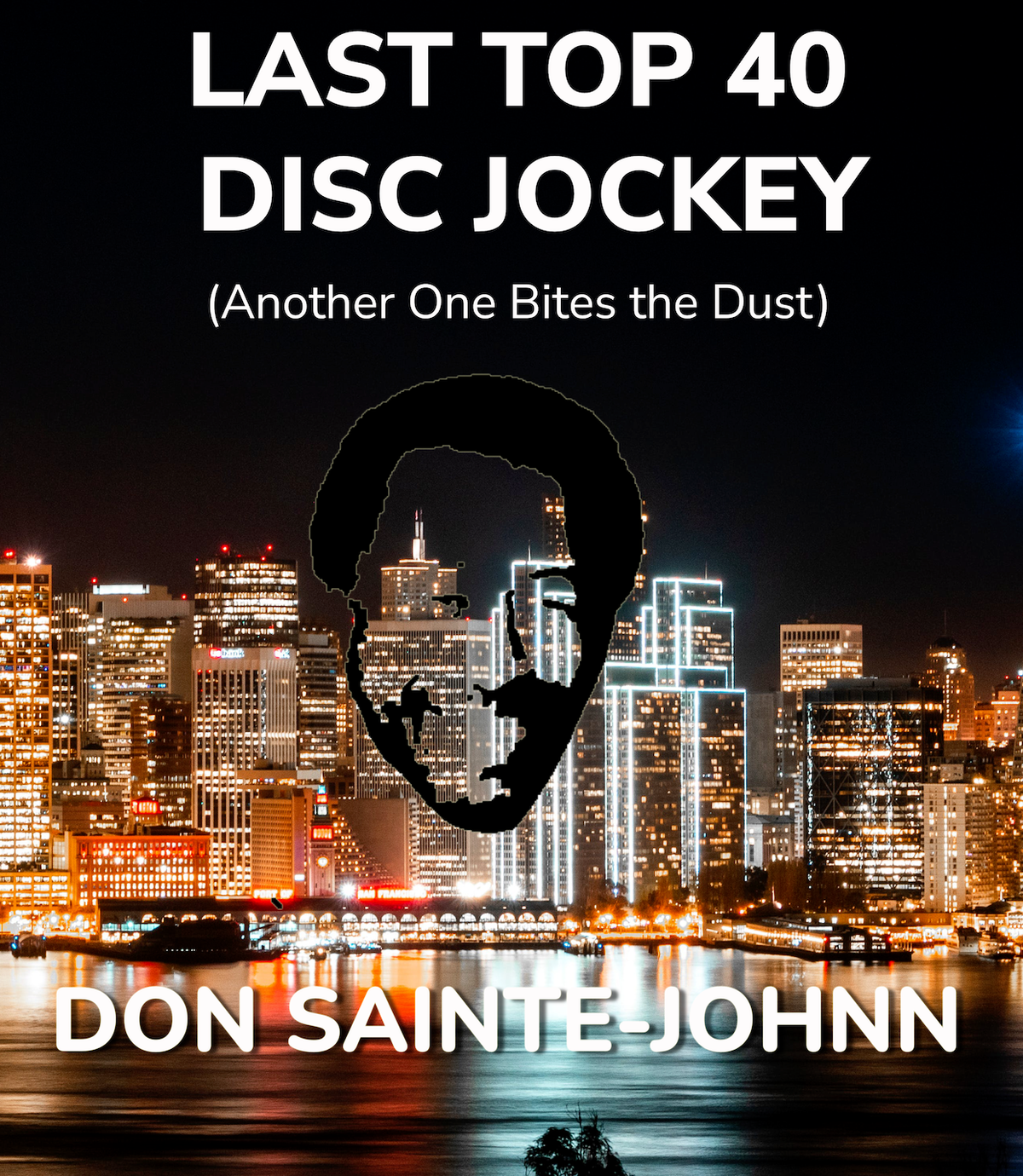
Sainte-Johnn, a veteran broadcaster whose career included stops in San Francisco and Sacramento, has put those memories on paper in his memoir, San Francisco’s Last Top 40 Disc Jockey (Another One Bites the Dust).

But the book is about more than one man sitting behind a microphone spinning records. It is also a trip back to a time when Top 40 radio was a powerful force in American popular culture — and when the person introducing a record could be nearly as familiar to listeners as the performer singing it.

Top 40 became the dominant music-radio format by taking what now seems like an obvious idea: Find the songs people wanted to hear and play them — a lot.

Long before Spotify algorithms, YouTube recommendations or TikTok could propel a song into the public consciousness, Top 40 radio served much the same discovery function.

And the DJ was the algorithm — except the algorithm had a voice, a sense of humor and occasionally an ego.

Continued below

By the 1960s, programmer Bill Drake had further streamlined Top 40 into the fast-moving format familiar to generations of listeners, using tightly controlled playlists, jingles, news and personalities. Drake's influence eventually extended to San Francisco's KFRC, which became one of the best-known Top 40 stations in the country.

That is where Sainte-Johnn becomes part of the story.

His broadcasting career took him through San Francisco, Sacramento, San Diego, St. Louis, Modesto and Yuma. But he is particularly identified with his role as the last Top 40 disc jockey hired at KFRC during the station's hit-making years.

His memoir traces a much longer journey, however.

Sainte-Johnn grew up in segregated Alabama before building a broadcasting career that took him into some of the nation's major radio markets. The book mixes that personal history with stories about the music, competition, personalities and cultural changes surrounding radio during its personality-driven Top 40 years.

For readers who lived through the era, much of the appeal is likely to be recognition.

Radio once provided a communal experience difficult to duplicate in today's fragmented media environment. Thousands — sometimes millions — of people in a market could hear the same song, the same DJ joke or the same station promotion at essentially the same moment.

A favorite disc jockey wasn't merely someone filling the space between records. The best developed relationships with listeners who heard them every morning driving to work, every afternoon coming home from school or late at night with a transistor radio beside the bed.

Sainte-Johnn was part of that world.

His professional résumé includes being named Billboard Air Personality of the Year in 1973 and 1974. He is also a member of the Bay Area Radio Hall of Fame, Modesto Radio Hall of Fame, St. Louis Radio Hall of Fame and National Black Radio Hall of Fame.

Northern California listeners also know Sainte-Johnn from a considerably longer run in Sacramento.

After his major-market radio years, he spent 13 years as an afternoon-drive personality at V101 in Sacramento. He also worked as the station's music scheduler, helping shape the sound listeners heard throughout the region.

Today, instead of talking to listeners through a radio studio microphone, Sainte-Johnn is helping teach another generation about media.

He is a Mass Media instructor at American River College and also works as a broadcast consultant, writer and speaker.

That gives San Francisco’s Last Top 40 Disc Jockey an interesting perspective. Sainte-Johnn isn't simply remembering the songs or recounting celebrity encounters. His story follows the enormous changes in broadcasting itself and the gradual disappearance of the kind of personality-driven radio that made DJs local celebrities.

The memoir has also found a home in an institution devoted to preserving music history. Sainte-Johnn says it has been accepted into the permanent collection of the Rock & Roll Hall of Fame Library & Archives.

Perhaps the greatest charm of Sainte-Johnn's story is remembering just how different discovering music once was.

There was no search box. No personalized playlist. No recommendation engine quietly calculating what you might enjoy next.

Sometimes you heard a song for the first time because you happened to turn on the radio.

And sometimes the voice on the other side of that radio belonged to Don Sainte-Johnn.

San Francisco’s Last Top 40 Disc Jockey (Another One Bites the Dust) is available for purchase through Amazon.