Rural Roots Sunday - Ag Land in Rural Elk Grove Still Working
That is the part I would want a person from the suburbs to understand. This is not preserved scenery. It is not a park. It is a working landscape
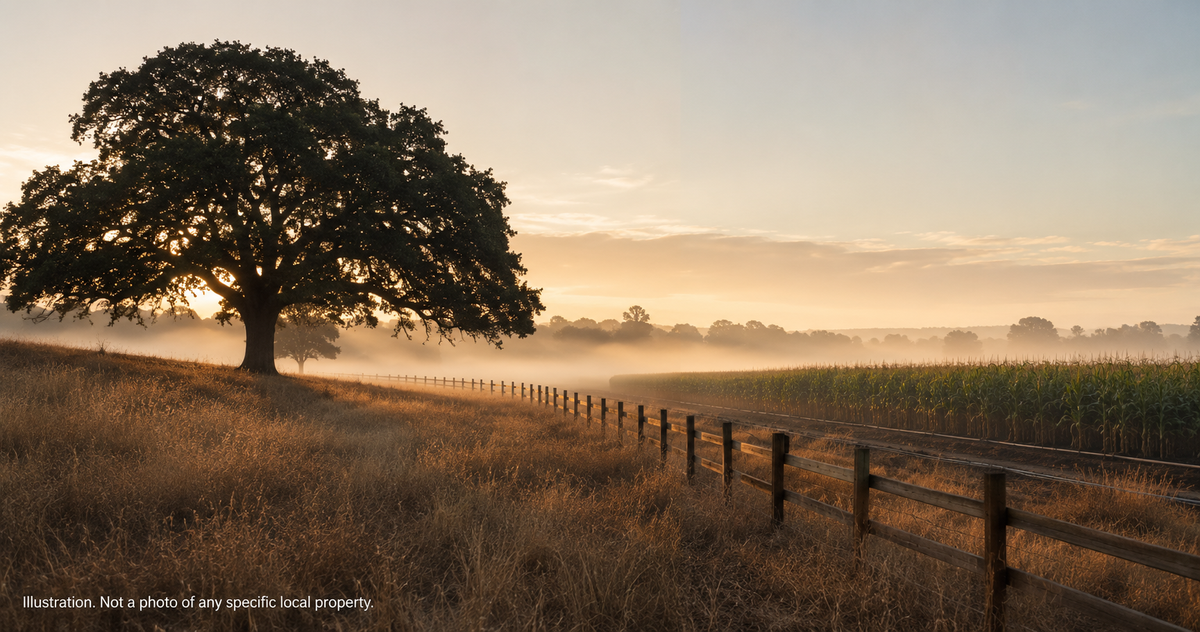
“…The Rural Area is valued in our community for its aesthetic and cultural significance, as well as the economic and educational opportunities that agriculture provides. Our commitment to maintaining the Rural Area is clear and codified in core planning documents…” Elk Grove General Plan, December 2025
People talk about the rural area like it is a view. Something pretty you pass on the way somewhere else. Open ground, a few fences, maybe some cattle standing around. What gets missed is that this is a workplace. There are families out here right now, this morning, doing the same thing their great grandparents did on the same ground.
Take Mahon Ranch out on Grant Line Road. The family has been farming that land since 1882. The story goes that the founder came to Sacramento in 1870, twenty-one years old, with thirty dollars to his name, and it took him twelve years to get his hands on the home ranch. Five generations later, they are still there, running around two hundred head of cattle on ground the Cosumnes River runs straight through. In 2007, the state recognized it as a California Heritage Ranch. That is a hundred and forty years of one family, one piece of land, and nobody selling out.
Head east on Jackson Road and you hit Davis Ranch, which has been farming since 1940. If you have ever bought Sloughhouse sweet corn, that is them. Ed Davis started it, his sons carried it, and in 1992 the operation became Davis Ranch LLC under three partners who still run it today. Right now, late July, is their season. That corn does not come from a warehouse. It comes from a field about fifteen minutes from your house.
There is a part of that corridor that most people have never heard of. The Signorotti family grew hops out in Sloughhouse starting around 1930, timed for the end of Prohibition. By the time it wound down, theirs was the last commercial hop yard left in the entire state of California. Production stopped in 1985. But here is the part I like. Somebody saved the rootstock. A neighboring farmer kept those old hop plants alive, and years later that same stock ended up in a Sacramento brewery bringing local hops back. The farm closed. The plants did not.
And it is not all century-old operations. JT Cattle Company was started in 2008 by two families raising beef on pastures along the Cosumnes. Adkins Family Vineyards planted their first vines in 2012 and had a bottle out by 2015. People are still choosing to start something out here, which tells you the ground is worth working.
That is the part I would want a person from the suburbs to understand. This is not preserved scenery. It is not a park. It is a working landscape, and the reason it still works is that the lots stayed big enough and the ground stayed open enough for it to make sense. Cut it into quarter-acre parcels and the cattle go, the corn goes, the vineyards go. Not because anyone banned them. Because they stop penciling out.
Every one of these places has a story I only know the outline of. So here is what I am asking. Over the next few weeks, I want to sit down with some of these families and tell it right, in their own words.
Who should we talk to? Drop a name in the comments. If your family has worked ground out here for generations, or you run a business that has been part of this community longer than most people have lived here, we would like to hear from you.