California's Redrawn 6th District Gives Richard Pan a Path, but Kevin Kiley Remains a Formidable Opponent
For Democrats, the most significant number is not Pan's second-place finish - It is the combined Democratic vote
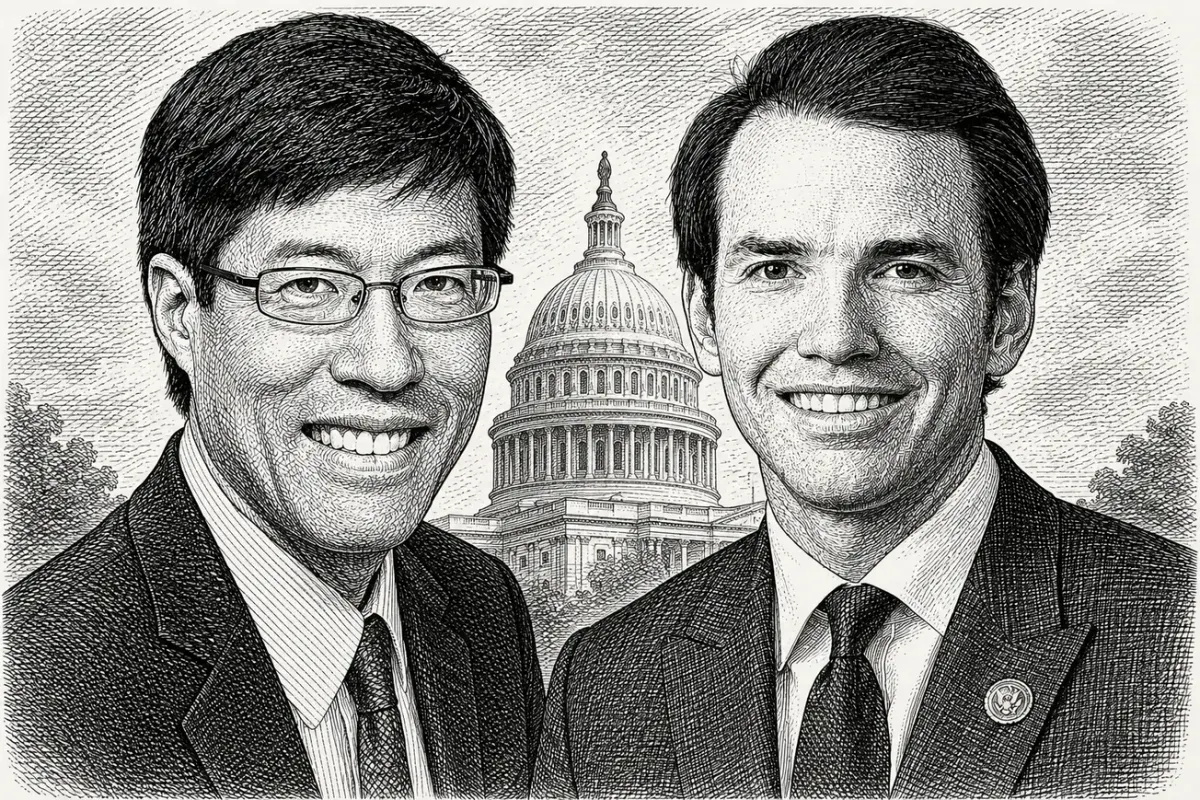
California's redrawn 6th Congressional District was one of five districts designed by Proposition 50 to give Democrats a better opportunity to compete and regain a majority. Based on the latest primary election returns, that objective appears achievable, but far from guaranteed.
The unofficial June 12 districtwide tally shows incumbent Congressman Kevin Kiley leading with 46,921 votes, or 24.3 percent, followed closely by former state Sen. Richard Pan with 44,805 votes, or 23.2 percent. Republican Michael Stansfield received 38,823 votes, or 20.1 percent, with the remaining Democratic candidates collectively capturing another 32.5 percent of the vote.
For Democrats, the most significant number is not Pan's second-place finish. It is the combined Democratic vote.
Taken together, Democratic candidates earned approximately 55.7 percent of the vote, a clear majority in a district that includes portions of Sacramento, Placer, and Yolo counties. While primary elections often produce unusual coalitions and voter behavior, those numbers suggest the district's underlying partisan foundation remains favorable to Democrats.
That does not mean Pan will have an easy path.
Kiley's political skills should not be underestimated. Since emerging from the California Legislature, he has consistently outperformed expectations.
His 2022 congressional victory was aided by an endorsement from Donald Trump, which energized Republican voters and helped elevate his profile statewide.
Although Kiley now appears on the ballot as a No Party Preference candidate and has made the rounds on CNN and MSNOW - something antithetical to the MAGA base - Democrats will undoubtedly spend the next five months reminding voters of his Republican roots, his voting record, and his Trump connection.
The question is whether that message resonates in a district targeted to gain one of five Democratic seats in California.
Pan enters the general election with several advantages. Unlike the crowded primary, he will be the sole Democratic alternative.
He also appears well-positioned to attract support from national organizations eager to reclaim seats they view as attainable. Groups such as 314 Action, which supports candidates with science and medical backgrounds, already feature Pan among their endorsed candidates.
The result could be one of California's most expensive congressional races.
Kiley has a strong fundraising operation and will likely attract significant support from Republican and independent expenditure committees seeking to protect a vulnerable incumbent they still view as one of their own. Pan, meanwhile, could become a beneficiary of national Democratic-leaning organizations.
If Democratic voters consolidate behind Pan and the district's partisan fundamentals hold, Democrats will have a legitimate opportunity to flip the seat. If Kiley prevails despite the district's Democratic lean, it will raise questions about whether candidate quality and incumbency remain more important than even the most carefully engineered political maps.
For now, the numbers suggest Democrats have an opening. Whether they can capitalize on it is the question that will define the next chapter of California's 6th Congressional District.