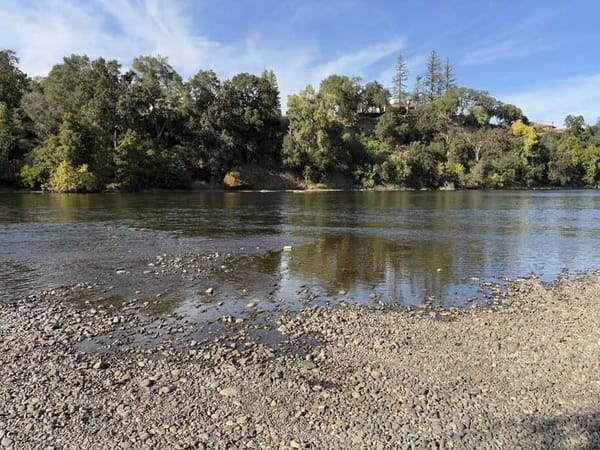
Record run of 2,150 salmon returns to Putah Creek, a Sacramento River tributary
The salmon were no longer able to make the migration up the creek to their historic habitat after the Monticello and Putah Diversion Dams were completed in 1957
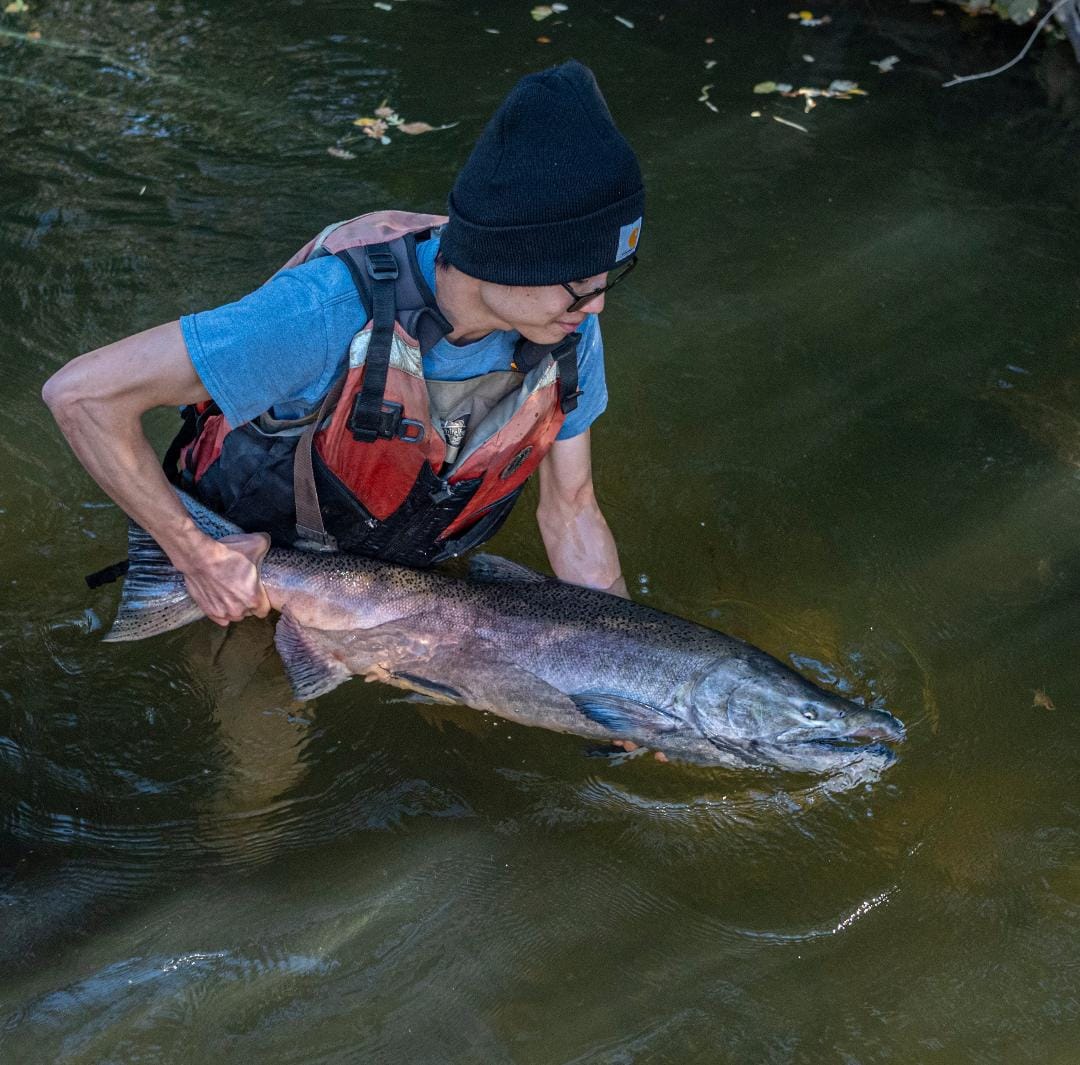
Since time immemorial, many thousands of Chinook salmon once spawned in the headwaters of Putah Creek, a tributary of the Sacramento River that runs through Lake, Napa, Solano and Yolo Counties.
The salmon were no longer able to make the migration up the creek to their historic habitat after the Monticello and Putah Diversion Dams were completed in 1957. However, a smaller number of Chinooks still made it most years into the waters below the diversion dam to spawn after Monticello Dam created Lake Berryessa and the diversion dam formed Lake Solano.
Fortunately, the decades of efforts of creek restoration by salmon advocates have borne fruit in recent years. A record 2,150 fall-run Chinook salmon returned to spawn in Putah Creek this fall, according to a report from the Solano County Water Agency.
The agency credits timely “water releases, habitat creation and regional collaboration among various public and private organizations” as responsible for this year’s big run.
The 70 mile long creek’s headwaters are in the rugged Mayacamas Mountains, a part of the Coast Range. Putah Creek originates from springs on the eastside of Cobb Mountain in Lake County.
The creek flows through two lakes, Berryessa and Solano, and two dams. It then flows into the Yolo Bypass Wildlife Refuge, then into the Toe Drain (Prospect Slough) and the Sacramento River near Rio Vista.
Key factors for their success on Putah Creek include the following, according to the agency:
• 25 Years of Investment: “The success is the culmination of a 25-year, $20 million grant-funded restoration effort. This includes current work on salmon passage in the lower creek, including the Yolo Bypass Wildlife Area, which is funded by the California Department of Fish and Wildlife and Wildlife Conservation.”
• Targeted Habitat Enhancement: “In 2025, the Solano County Water Agency (SCWA) placed 500 tons of gravel in the creek. Salmon rely on clean gravel beds to build their nests for spawning.”
• Adaptive Water Management: SCWA also implemented a test release of extra water this year, timed to mimic natural flows, a technique known as functional flows. This pulse of water appears to have successfully attracted and guided more salmon into the creek.”
The agency noted that Putah Creek, which runs along the border of Yolo and Solano Counties near Sacramento, has historically supported “a small, but vital salmon population.”
The previous salmon return estimate was around 1,700 in 2016, but this year's record-breaking number is the result of a “precise, individual count conducted by biologists with the University of California, Davis at the Department of Wildlife, Fish, and Conservation Biology,” the agency noted.
"The number of adult salmon returning in 2025 is a testament to the collaborative efforts among citizens, water managers, landowners, and scientists who are all working together to create a creek that can support people, fish and wildlife," said Solano County Water Agency General Manager, Chris Lee. “This successful run validates the work done to date and gives us great confidence Putah Creek will continue to support salmon runs for generations to come.”
While about 80% of Putah Creek's returning adults currently originate from the Mokelumne River hatchery, the goal is to significantly increase the number of returning adults that originate from Putah Creek instead.
"In previous years, about 12% of the returning adults were born directly in Putah Creek. If a greater percentage of the 2025 progeny survive and return as adults, the run could grow even larger, offering a much- needed boost to California’s overall declining salmon populations," said Lee.
“We now need to work on the whole pathway between the Delta and the Yolo Bypass,” said Streamkeeper Max Stevenson. “We are working on improving water quality and fish passage. Putah Creek salmon now go up an agricultural drain — the Toe Drain — to reach their spawning grounds in the creek. We are not used to seeing salmon going up an agricultural drain. We need as a community to manage afor the fish.”
He also noted that are other reasons for the spawning success this fall including favorable ocean conditions, more stray salmon from the Central Valley fish hatcheries going up the creek, and the opening of the check dams in the Yolo Bypass.
With more than 2,150 adults spawning, the creek is expected to produce potentially half a million baby salmon next spring—a level of natural production comparable to a small fish hatchery, according to Stevenson.
He said the water agency releases more water into the creek below the Solano Diversion Dam in the spring and less in the winter, with minimum flows ranging from 5 cfs to 50 cfs. Approximately 32,000 acre-feet per year is required to be passed below the dam for environmental purposes
In addition to the Chinooks, the creek also hosts steelhead and lamprey eel migrations. “We get lots of juvenile lampreys in our traps on the creek,” he stated.
The section of Putah Creek from the Putah Diversion Dam to Monticello Dam, a cold water tail water fishery, is managed as a wild trout catch-and-release fishery by the California Department of Fish and Wildlife. Lake Berryessa is a popular fishery for rainbow trout, landlocked king salmon, kokanee salmon, black bass, crappie, bluegill and channel catfish. I have fished the Lake Berryessa, Lake Solano and Putah Creek many times over the years with excellent results.
“The future of salmon in California depends on supporting the entire salmon lifecycle; including spawning areas, food production, protection from predators, and availability of water. While much work remains to be done, 2025 is a historic success, marking a pivotal moment in our goals for native Chinook Salmon,” Stevenson concluded.
It must be pointed out that lots of prayers have been laid down along Putah Creek by Desirae Harp and other Pomo and Wappo water protectors during the Putah Creek segment of the Winnemem Wintu Tribe’s Run4Salmon prayer journey over the past several years.
It must also be pointed out that the record return of salmon on Putah Creek takes place as the Sacramento-San Joaquin River is its biggest-ever ecological crisis in memory. While the salmon returns to Putah Creek and other Sacramento River tributaries have been much better this year, these promising runs occur after an unprecedented three year closure of the commercial salmon fishery off the California coast and the third year of a complete closure of the main stem Sacramento to recreational fishing, due to the collapse of the Sacramento fall-run Chinook salmon population.
Meanwhile, the Delta smelt, an indicator species that was once the most abundant fish in the estuary, has become functionally extinct in the wild. The California Department of Fish and Wildlife has found not a single Delta smelt in its Fall Midwater Trawl survey throughout the Delta in 7 years: apps.wildlife.ca.gov/...
While a number of factors have contributed to the demise of the smelt, salmon and other Bay-Delta fish populations in recent years, no factor is more central than the export of mass quantities of water from the Delta to corporate agribusiness and Southern California water agencies.
Background: On May 23, 2000, following 10 years of litigation related to streamflows for supporting fish and other natural resources, Putah Creek Council, City of Davis, and UC Davis signed on to a historic water accord with the Solano County Water Agency, Solano Irrigation District, and other Solano water interests to establish permanent surface water flows for the 23 miles of Putah Creek below the Putah Diversion Dam: sacriver.org/...
Water is now released to Lower Putah Creek from Putah Diversion Dam to maintain a minimum flow for environmental protection; to meet valid water rights to the Interstate 80 bridge; and maintain continuous flow downstream to the western boundary of the Yolo Bypass. Approximately 32,000 acre-feet per year is required to be passed below the dam for environmental purposes. Another 200,000 acre-feet of Putah Creek water per year is diverted to Solano County farmers (about 75%) and urban users (about 25%.