Public Comments on Draft EIR For Elk Grove's Proposed Summer Villas Project
The omission of the Construction Plan from the DEIR, in my opinion, deprived the Public, in particular, the Rural Community surrounding this Project the required insight into the Summer Villas Project
The following are comments submitted on the City of Elk Grove's draft Environmental Impact Report (EIR) for the proposed Summer Villas project in rural Elk Grove. These comments are from Elk Grove resident Ms. Suzanne Pecci and were shared for publication.
As a resident of Elk Grove for 50 years, and a Community Member in Rural East Elk Grove, residing in the Hop Ranch Estates Subdivision for the past 40 years, I am providing written comments and my opinion on the Summer Villas DEIR as a follow-up to my public comments made at the Community Meeting on November 12, 2025. There are major Project environmental impacts that were not studied due to the decision to exclude the Summer Villas Construction Plan from the Summer Villas Project DEIR.
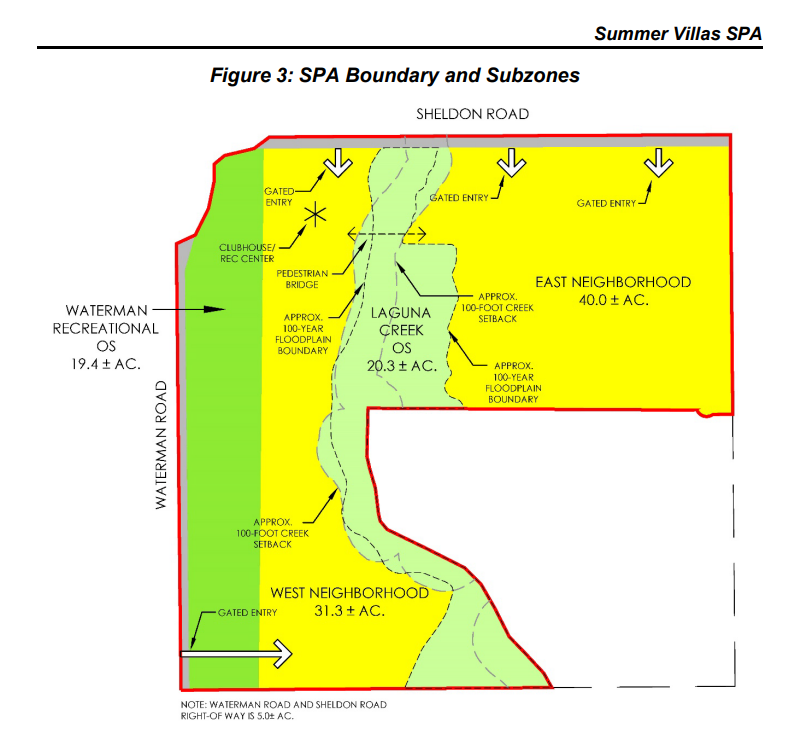
The Summer Villas Draft Environmental Impact Report (DEIR) does not include the Construction Plan to build up to 499 single-story single-family (over 55) with a private clubhouse/ recreation center at the 116.3-acre site adjacent to Laguna Creek. The proposed Construction Plan for Summer Villas has been the premise for the Notice of Preparation, and basis for discussion at the Community Meeting on May 29, 2025, at the Project Site, 9350 Sheldon Road, the NOP Scoping Meeting on September 23, 2024 and Public Meeting on November 13, 2025, for a public discussion of the DEIR for the Summer Villas.
The Project Applicant’s presentations included discussions of the Construction Plan. City of Elk Grove Staff presentations , explanations, or responses to questions raised by the public at these meetings never made it clear that the proposed Project Construction was not included in the much-anticipated Project DEIR. The Community, in my opinion, understood the DEIR would be their opportunity to address the environmental impacts, health and safety issues community problems they felt the Summer Villas posed.
These public meetings, absent this clarification, in my opinion, were misleading to the public in attendance and fostered the community-wide misunderstanding that all of their environmental issues, health and safety impacts and community concerns would be somehow addressed in the DEIR—which they, in my opinion, were not.
In my opinion, there was a decision to somehow compartmentalize the proposed Summer Villas Project into small actions, separate and distinct planning components each requiring various future approvals to address potential additional environmental impacts at dates, including the approval of the Special Planning Area (SPA), notedly without entitlements or any specific development proposals and future construction— all at unspecified dates and meetings. Each segmented action requiring additional approvals presents nothing but a tangled web of bureaucracy seemingly crafted to obscure the Public’s understanding and obstruct the Public’s Right to be Informed under CEQA. To exclude the Project Construction Plan from the Project DEIR was not transparent and misleading to the public.
Providing a Draft Environmental Impact Report (DEIR) without an adequate construction plan likely violates the California Environmental Quality Act (CEQA) requirement for a stable and accurate project description, making it vulnerable to legal challenge and potentially leading to project delays or denial.
The core issue is that a DEIR without sufficient project details, including construction plans, would:
Hinder informed decision-making: The lead agency's decision-makers and the public need a clear understanding of the project's specifics to evaluate its potential environmental effects, propose effective mitigation measures, and consider alternatives.
Prevent adequate environmental analysis: The CEQA process is intended to inform about potential environmental damage and identify ways to avoid or significantly reduce impacts. Without a construction plan, a lead agency cannot fully analyze all potential significant effects, such as impacts on air quality, noise, traffic, and hazardous materials.
Obstruct public participation: An accurate and stable project description is essential for meaningful public participation. If the details are too vague, the public cannot provide informed comments, thereby undermining a key feature of the CEQA review process.
Lead to an inadequate document for future use: If construction details are not provided during the initial environmental review, other responsible and trustee agencies may be unable to complete their review or issue necessary permits, potentially requiring a supplemental or subsequent EIR later.
Risk litigation: The failure to present technical characteristics and instead presenting only concepts and impact maximums can lead to the EIR being found legally insufficient in court, which can halt the project until a compliant document is prepared.
While the level of detail required can vary between a general plan EIR and a specific project EIR, the lead agency cannot defer the analysis of significant impacts to a later date. A construction plan provides the necessary details to ensure all phases of the project's planning, implementation, and operation are considered.
CEQA Project Description, Absent “Unusual Circumstances ...Sep 17, 2019 — Environmental documents aimed at preserving a wide range of development options for a project site must be sufficientl...Kronick Moskovitz Tiedemann & Girard.
General Plan Guidelines - Chapter 10 Level of Detail in Analysis the general plan EIR need not be as detailed as an EIR for the specific projects that will follow (CEQ... Governor's Office of Land Use and Climate Innovation (.gov)
CEQA Case Update: Court Holds that Approval of Project ...Apr 7, 2022 — In its decision, the Court recognized that an accurate project description is an essential component (the “sine qua non... Mitchell Chadwick
The Summer Villas Project DEIR does not include the required Construction Plan and, therefore, fails to address Safety and Evacuation Hazard studies and analyses for Projects proposed to be located in identified hazard-prone areas with the potential to exacerbate existing hazards or create new ones. Safety and Evacuation Hazard Studies are a Required Element in a Draft Environmental Impact Report (DEIR)
High Flood Risk: The proposed Summer Villas Project covering 1116.3 of agricultural land is adjacent to Laguna Creek. Laguna Creek which has a FEMA designation of flood designation of AE. Zone AE signifies a high-risk flood zone with a 1% annual chance of flooding. The site on which Summer Villas has been proposed to be built has significant risk of flooding due to its proximity to the creek.
•Key aspects of the analysis would include Identification of potentially significant affects of environmental hazards such as flooding, fires and release of hazardous materials how the proposed project might impact public safety in evacuating the project and surrounding community The analyzes would include: Assessment of Emergency Response and Evacuation Plans for potential conflicts with or impacts on existing or proposed emergency response and evacuation plans; Consistency with with federal, state, and local safety plans and regulations, including a City's General Plan Safety Element; Traffic and Access Routes are a crucial part of the analysis and involves examining how a project might affect evacuation times for both new and existing residents, and ensuring emergency vehicle access is maintained. Recent court rulings in California have reinforced the requirement for robust, quantitative analysis of evacuation routes and travel times.
The DEIR Domestic Water Demand Analaysis Water by Wood Rogers for treated water supply for Summer Villas to be provided by Sacramento County Water Agency(SCWA)/ Elk Grove Water District (EGWD) fails to fully address the potential impacts of future groundwater depletion and potential and unmitigated impacts to domestic wells in The South American Subbasin in Elk Grove.
The Elk Grove Water District (EGWD and the Sacramento County Water Agency (SCWA) are identified as the public water providers for the Summer Villas Project Area. When a Project Construction Plan is part of the Project's environmental review process, a Water Supply Assessment (WSA) is required to determine if planned water supplies for SCWA's Zone 40 are sufficient to meet the demands of this project in addition to existing and projected water supply obligations over the next 20 years. The Water Supply Master Plan has, therefore, not been provided for public review and comment in the Summer Villas DEIR due to the absence of a Construction Plan.
The DEIR for the Summer Villas states project's water demand will require an additional water supply, and the SCWA Zone 40 Master Plan 2016 anticipates using both groundwater and surface water to meet this demand. The plan relies on a "conjunctive use" strategy, meaning the mix of groundwater and surface water will vary depending on hydrologic conditions. Additional wells are likely to be part of the long-term plan to meet water needs, particularly in drier years when surface water is less available, as described in the Sacramento County Water Agency (SCWA) water supply assessments.
Future demand: Meeting future water demands, including for new developments like Summer Villas, will require more than just conservation efforts and necessitate increased capacity, including new wells.
There is no guarantee of treated water for the Summer Villas Project by either SCWA or EGWD without constructing additional wells, as well as the replacement of many existing old wells in new locations due to current sites being too small for replacement wells, in addition to water quality concerns.
Even with water conservation measures in place, new infrastructure is needed to meet future demand, especially with climate change expected to make dry years more frequent. Climate change is expected to lead to more frequent and intense dry years, which will affect the reliability of the surface water supply and increase the importance of reliable groundwater extraction.
SCWA has rights to use groundwater and will continue to do so to meet customer demands. In dry years, when less surface water is available, there will be a greater reliance on groundwater supplies from wells which can impact domestic wells. While the DEIR discusses the need to monitor domestic well water levels, monitoring does not mitigate the potential for dry wells nor does it fund the deepening or replacement of domestic wells in the Rural Community of Elk Grove.
More recent planning documents, such as the Water Supply Investment Plan (WSIP) and the Urban Water Management Plan (UWMP)were not addressed in the DEIR which would have provided a more accurate analysis and would have been studied if the Construction Plan for Summer Villas had been included in the Project DEIR as set forth in the Statutes.
The ommission of the Construction Plan from the DEIR, in my opinion, deprived the Public, in particular, the Rural Community surrounding this Project the required insight into the Summer Villas Project and the required opportunity to evaluate the Project’s environmental impacts to their private domestic wells.
This public perspective which is a required by the CEQA process is critical for Public Agencies, The City of Elk Grove Planning Commission and City Council to render an informed decision on the Summer Villas Project DEIR is, therefore, missing.
Suzanne Pecci, Elk Grove