One Small Step Forward, a Big Leap Backwards for Matsui in the Endorsement Dance
For Rep. Doris Matsui, the latest round of endorsements offers a study in contrast
In modern politics, endorsements are no longer the blunt instruments they once were. A nod from a newspaper editorial board or a cluster of local elected officials rarely decides an election outright.
Voters are more fragmented, more skeptical, and more inclined to trust their own instincts over institutional guidance. Still, endorsements retain something quieter but no less important: they signal credibility, viability and — perhaps most critically — access.
For Rep. Doris Matsui, the latest round of endorsements offers a study in contrast.
On one hand, there is the familiar choreography of local officials lining up in support. On the other hand, a far more consequential break: the refusal of The Sacramento Bee to endorse her re-election.
The former looks like progress. The latter feels like something else entirely.
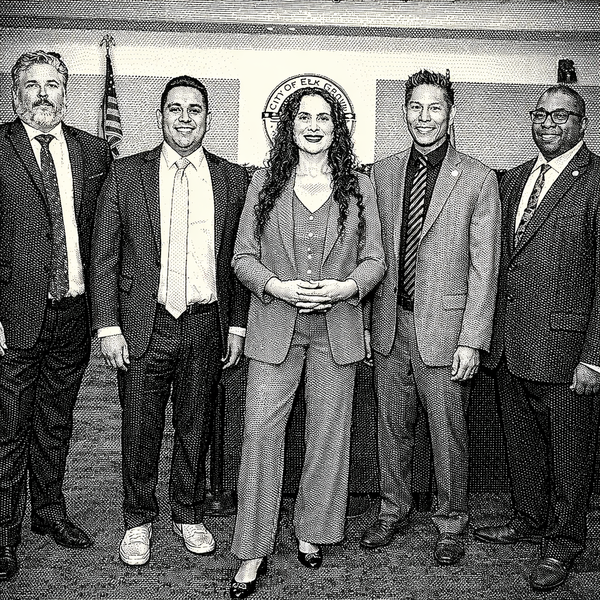
Consider the endorsement from Elk Grove’s political leadership. In a social media post, Mayor Bobbie Singh-Allen, along with three of her city councilmen - Rod Brewer, Sergio Robles, and Darren Suen praised Matsui as a proven deliverer of federal resources, citing millions directed toward infrastructure, flood control, and transit expansion.
These endorsements are not insignificant. They reinforce a narrative of effectiveness — the idea that seniority in Congress translates into tangible benefits back home.
But such endorsements also come with an unspoken logic. Local elected officials depend, in part, on their relationships with federal representatives.
Funding for transit lines, levees, and regional projects often flows through congressional channels. Public support, then, can reflect not just admiration but alignment — or, more candidly, the practical necessity of staying in good standing with a powerful incumbent.
This is the endorsement economy at its most transactional: loyalty in exchange for access.
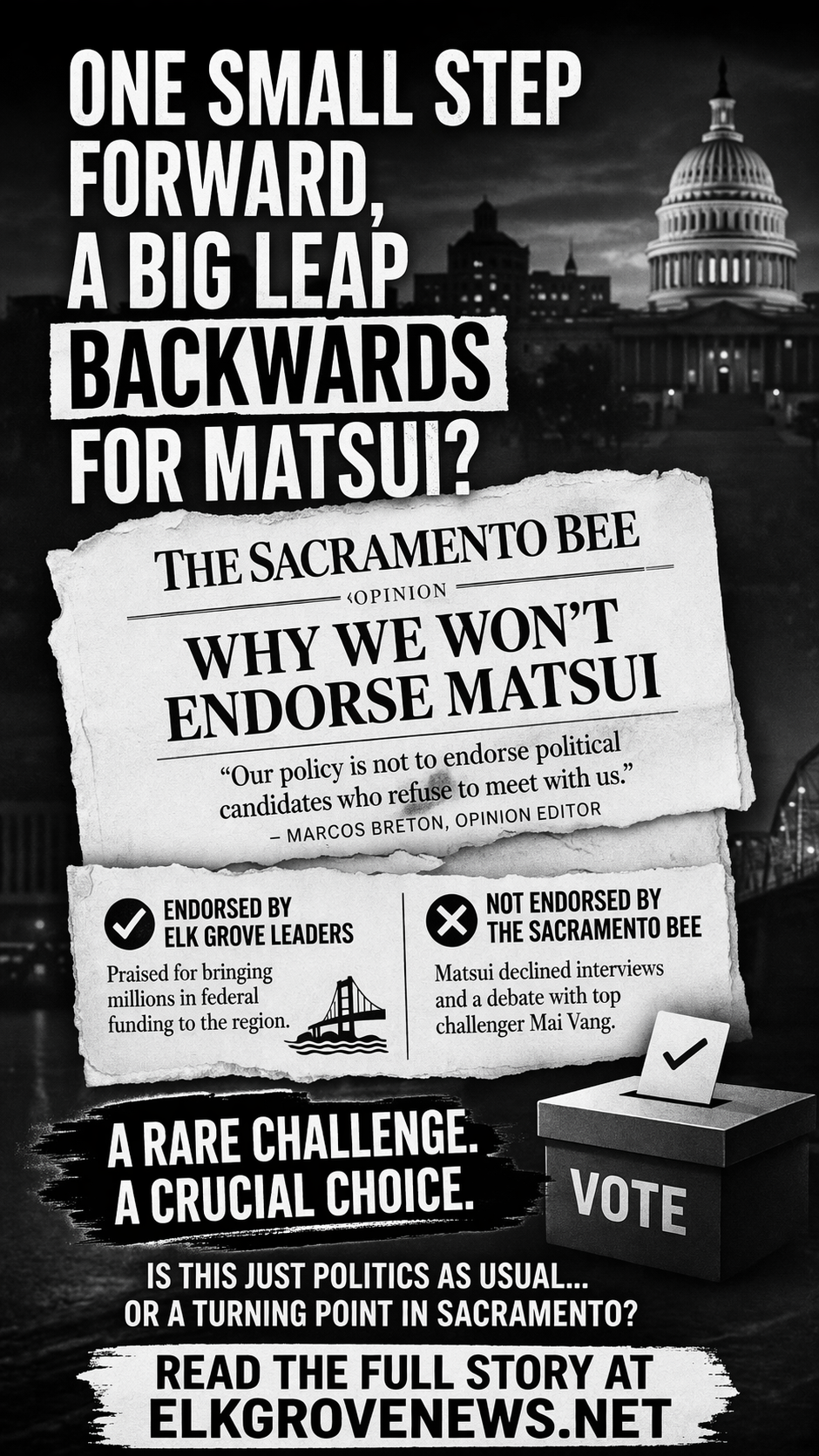
Yet if those endorsements represent the expected rhythm of incumbency, the decision by The Sacramento Bee represents a disruption — and a notable one.
The paper’s editorial board, led by columnist Marcos Breton, broke with its longstanding pattern of supporting Matsui. The reason was not ideological divergence but something more procedural — and perhaps more revealing.
“Our policy is not to endorse political candidates who refuse to meet with us,” Breton wrote, noting that Matsui declined multiple opportunities to engage with the editorial board.
That refusal carries consequences.
In declining both a proposed debate with her chief challenger, Mai Vang, and a one-on-one interview process, Matsui effectively disqualified herself from consideration. The Bee’s conclusion was blunt: “Matsui’s rejection represents a step backward in local democracy and election transparency.”
For a member of Congress who has represented Sacramento for two decades — and whose family’s political legacy stretches even longer — such a rebuke is striking. The Bee has historically been a reliable institutional ally. Its absence now is not just a missing endorsement, it is a signal.
The editorial goes further, framing the decision as a question of accessibility and accountability. A candidate who declines unscripted engagement, Breton argued, is placing “political interests… more important than the interests of the public to hear from their political leaders.”
That critique lands differently in a race that, for the first time in years, features a credible and well-funded challenger. Vang, a Sacramento City Councilmember with growing regional support, represents a generational and stylistic contrast. At 40, she is positioned as both an insider and an insurgent — someone with enough experience to be taken seriously, but enough distance from Washington to argue for change.
In that context, the Bee’s non-endorsement does more than withhold support. It amplifies a narrative of vulnerability.
None of this is to suggest that Matsui’s campaign is suddenly imperiled. Incumbents retain formidable advantages: name recognition, fundraising networks, and a record of delivering federal dollars.
The Elk Grove endorsements underscore that reality. They are, in their own way, a reminder that power tends to reinforce itself.
But elections are not won on advantages alone. They are also shaped by perception — by moments that suggest momentum shifting, however subtly.
In the endorsement dance, Matsui has taken one small step forward, buoyed by local allies eager to highlight her record. But the step backward — the loss of a customary endorsement from her region’s paper of record — is larger, more visible, and harder to dismiss.
Endorsements may not decide elections anymore. But sometimes, the ones you don’t receive say the most.