Mystery Political Survey Tests Matsui-Vang Voters, but Who Paid for It?
Several statements emphasized Rep. Matsui's congressional experience and legislative accomplishments
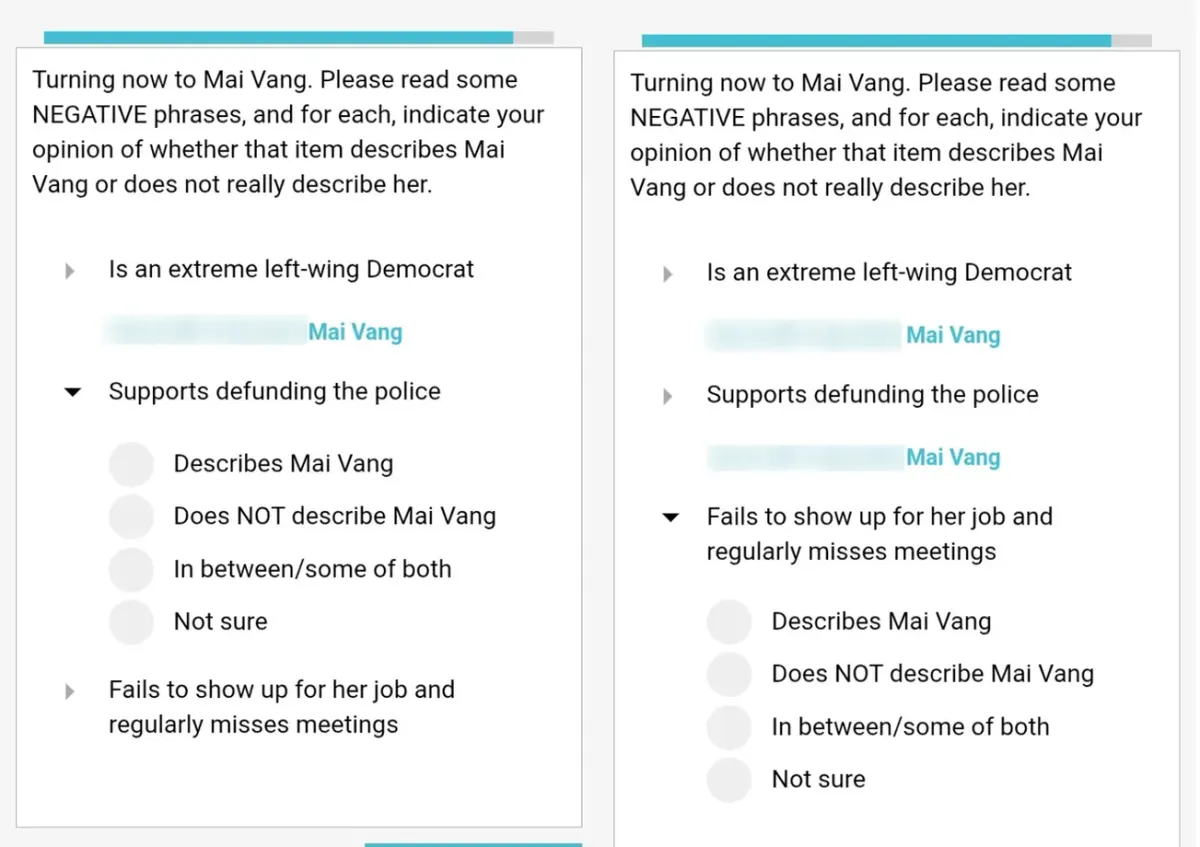
ELK GROVE, Calif. — An unidentified campaign or political organization is testing voters' reactions to competing messages about Rep. Doris Matsui and Sacramento City Councilmember Mai Vang as the two Democrats compete for California's 7th Congressional District seat in November.
story continued below

An Elk Grove News reader shared screenshots of an extensive political survey received by text message Saturday, Sept. 26. The questionnaire examined voters' attitudes toward both candidates, tested favorable statements about Matsui and presented criticisms of her wealth, stock trading and corporate campaign contributions.
The survey was conducted by American Directions Research Group, a Washington, D.C.-based national polling company, using the Forsta online survey platform. The polling firm identified itself on the questionnaire's introductory screen, but the survey did not disclose who commissioned or financed the research.
American Directions specializes in political and public opinion research. According to its website, the company completed more than 500 projects involving 354 campaigns during the 2024 election cycle. It also confirms that it uses Forsta to conduct online and text-message surveys.
The questionnaire began with questions about respondents' voting history, their preferences in the 2024 presidential election and their likelihood of voting in November.
It subsequently turned to the Matsui-Vang contest, asking respondents which candidate they would support before presenting a series of political messages.
Several statements emphasized Matsui's congressional experience and legislative accomplishments, including federal funding for Sacramento-area flood protection, improvements to Folsom Dam, light rail modernization and health care.
Another statement credited Matsui with helping pass the Affordable Care Act and legislation lowering prescription drug costs. Respondents were asked to rate the strength of these arguments as reasons to support her.
The questionnaire also presented Matsui as an opponent of President Donald Trump's policies on health care, immigration and environmental protection.
Other questions examined potential vulnerabilities in Matsui's campaign.
One statement described her as a wealthy establishment politician who has spent decades in Washington while allegedly enriching herself through stock trading.
Another questioned her corporate campaign contributions and alleged financial connections to companies benefiting from data center development.
Respondents were asked whether those statements raised major, minor or no concerns about supporting Matsui. The allegations were presented as statements made by her opponents, not as independently verified findings.
The survey also included messaging portraying Vang as politically far-left, contrasting her positions with Matsui's congressional record.
Taken together, the favorable statements about Matsui and the characterization of Vang suggest the questionnaire could have been commissioned by Matsui's campaign or an outside organization supporting her.
However, the survey's sponsorship remains unconfirmed. Campaigns and independent political organizations frequently test both favorable and unfavorable messages about candidates to determine how voters respond.
The questionnaire repeatedly asked respondents to reconsider their candidate preferences after reading different political arguments. One question asked voters to make their selection based on everything they had read during the survey.
Such message testing allows researchers to measure how particular arguments affect voter preferences, although the screenshots provide no information about the survey's sample size, methodology or findings.
The identity of the organization financing the survey could become clearer when additional campaign finance reports are filed.
According to the Federal Election Commission, the next quarterly disclosure reports for congressional campaigns and quarterly-filing political committees are due Oct. 15 and cover financial activity through Sept. 30.
Those filings could reveal polling or research expenditures associated with the survey, although payments made through political consultants or other intermediaries could make identifying the ultimate sponsor more difficult.
For now, the survey provides a glimpse of the political messages being tested in the Matsui-Vang contest, but the organization paying for that research remains unknown.