Klamath Indigenous Land Trust purchases 10,000 acres on Klamath River from PacifiCorp
PacifiCorp, the previous landowner, partnered with KILT to complete the sale following a decades long Indigenous-led effort to remove four dams on the Klamath River, completed last year
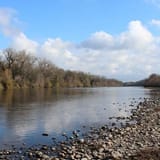
Klamath Basin, CA/OR — As salmon return to the headwaters of the Klamath River for the first time in over 100 years after the removal of four dams, the newly formed Klamath Indigenous Land Trust (KILT) and PacifiCorp yesterday announced the landmark purchase of 10,000 acres in and around the former reservoir reach of the river, according to a press statement.
Representatives of the trust say the transaction represents “one of the largest private land purchases by an Indigenous-led land trust in U.S. history.”
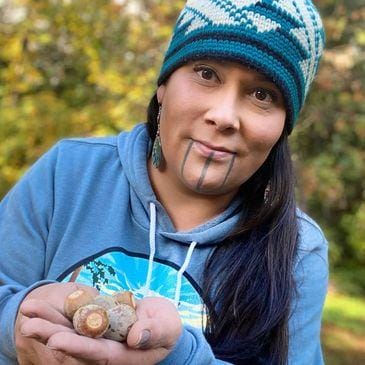
“Dam removal allowed the salmon to return home. Returning these lands to Indigenous care ensures that home will be a place where they can flourish and recover,” said Molli Myers (Karuk), President of the Klamath Indigenous Land Trust Board of Directors. “Our communities spent generations fighting for this moment and we honor our ancestors who carried this vision forward. The healing that’s underway is real, and this acquisition reflects the future we’re building together as people of the Klamath Basin.”
“PacifiCorp, the previous landowner, partnered with KILT to complete the sale following a decades-long Indigenous-led effort to remove four dams on the Klamath River, completed last year. The purchase includes lands upstream and adjacent to the former hydropower project that are central to the future health of the river and its fisheries. With this transfer, stewardship of these lands will be guided by Indigenous values and ecological restoration goals for the first time in over a century,” the statement continued.
“PacifiCorp is gratified to see these lands transition to a stewardship model that honors their cultural and ecological significance,” said Ryan Flynn, president of Pacific Power, the division of PacifiCorp that serves customers in California, Oregon and Washington. “We recognize the leadership of the Klamath Basin Tribes and KILT in shaping a restoration vision that will benefit the entire region.”
“KILT was formed by Indigenous leaders from four different Klamath Basin Tribes who met after the 2002 Fish Kill and spent the next two decades committed to the grassroots movement to un-dam the Klamath and bring their salmon home,” explained KILT Board Vice President Wendy Ferris-George (Hupa/Karuk). “We are from different Tribes and we each have our own cultural traditions, but it was through working together and by bringing Tribal People from all over the Basin together that created this moment.”
With the acquisition complete, KILT’s next steps include “developing comprehensive land management plans with input from area Tribes, ensuring stewardship reflects both cultural values and ecological priorities. These plans will address habitat recovery, cultural resource protection, fire management, and public access considerations.”
“This is the next chapter in the Klamath River’s renewal,” Board member Jeff Mitchell (Klamath/Modoc) observed. “It’s proof that Indigenous leadership and community partnerships can achieve transformational change at a landscape scale.”
As one who has covered Klamath and Trinity River fisheries for 40 years and the campaign since the fish kill of 2002 to restore the once abundant salmon and steelhead populations in the Klamath River watershed, I must say that the purchase of the 10,000 acres by the Klamath Indigenous Land Trust is fantastic news!
The Klamath-Trinity River watershed has historically been the second largest producer of Chinook salmon in California next to the Sacramento-San Joaquin River watershed. The Klamath also has historically supported big runs of coho salmon, steelhead, Pacific lamprey, green sturgeon and other fish species.
Funding for the purchase was provided by The Catena Foundation, the Community Foundation of New Jersey, and an anonymous donor.
Background:
Please note that these lands are distinct from the ones held by the Klamath River Renewal Corporation for the purpose of dam removal and restoration, often referred to as the ‘Parcel B’ lands.
About KILT
The Klamath Indigenous Land Trust was formed last year by a group of colleagues and friends that worked together for over two decades on the Bring the Salmon Home campaign that led to the eventual removal of the lower four Klamath River dams.
KILT’s Mission is to protect and preserve land for the benefit of Klamath Basin tribal communities and to advance public interest purposes such as fish and wildlife habitat restoration and enhancement, public education, and public recreational access. In this way we seek to empower Klamath Basin tribal communities by providing them with greater control over their land and resources through facilitating and supporting land returns, conservation easements, and other mechanisms.
About PacifiCorp
PacifiCorp is one of the lowest-cost electrical providers in the United States, serving more than 2 million customers. The company operates as Rocky Mountain Power in Idaho, Utah and Wyoming and as Pacific Power in California, Oregon and Washington. PacifiCorp provides safe and reliable service through a vast, integrated system of generation and transmission that connects communities with the largest regulated utility owner of wind power in the West. For more information, visit PacifiCorp.com.
Meanwhile, the recovery of salmon on the Klamath River above the former PacifiCorp dam sites has exceeded all expectations.
Preliminary data from California Trout’s SONAR fish counting station below the former Iron Gate Dam site reveals nearly 10,000 salmon. The nearly 10,000 adult-sized fish (≥ ~2 feet) migrated upstream between September 12 and November 14, according to a social media post by CalTrout.
This preliminary estimate is 30 percent higher than the group’s fish counts at this same time last year. The peak passage day was on October 9 with 681 fish, the group said.
“It is a relatively compressed run: 90% passed in just 25 days (Sept 26 - Oct 19),” the group revealed.
Data was analyzed using hand counts + AI modeling developed by the Fisheye team (joint project between Caltech, MIT, UMass Amherst).
CDFW reports to date confirm the return of promising numbers of salmon above the dams. In little more than a year after the historic removal of four hydroelectric dams on the Klamath River, California Department of Fish and Wildlife (CDFW) scientists this fall saw salmon in “just about every corner of their historic habitat,” according to the CDFW.
“The speed at which salmon are repopulating every nook and cranny of suitable habitat upstream of the dams in the Klamath Basin is both remarkable and thrilling,” said Michael Harris, Environmental Program Manager of CDFW’s Klamath Watershed Program, in a statement. “There are salmon everywhere on the landscape right now, and it’s invigorating our work.”
While adult returns of salmon are ongoing and final estimates won’t be available until the coming year in preparation for the Pacific Fishery Management Council meetings that craft the ocean and river salmon seasons on the West Coast, initial reports indicate “a stronger fall-run Chinook salmon return than last year with widespread dispersal of the fish,” the CDFW wrote.
Final data on salmon escapement to the Klamath/Trinity River watershed will be released by late February 2026 in preparation for the Pacific Fishery Management Council (PFMC) meetings in March and April. The data will be used to set the recreational, commercial and tribal salmon fisheries for 2026.