Fish groups say juvenile salmon will die unless feds release pulse flows into Sacramento River
The salmon released into the river were the progeny of adult Chinooks that returned to spawn in the hatchery on Battle Creek in the fall of 2025

Sacramento— The federal government yesterday released over 6.2 million juvenile Sacramento River Fall-run Chinook Salmon into Battle Creek at the Coleman National Fish Hatchery, a move celebrated by representatives of fishery conservation groups.
But representatives of those groups warned that the failure by the U.S. Bureau of Reclamation to release sufficient water flows into the Sacramento River in a time of a record heat wave could result in the death of millions of salmon as they migrate downriver.
“Sooner do we start to gain a little ground back in rebuilding our salmon runs than the federal Bureau of Reclamation is destroying them again,” said John McManus, Board Member of the Golden State Salmon Association.
The salmon released into the river were the progeny of adult Chinooks that returned to spawn in the hatchery on Battle Creek in the fall of 2025, the first time in the last three years that improved numbers of salmon returned to the hatchery, Battle Creek and the Sacramento River.
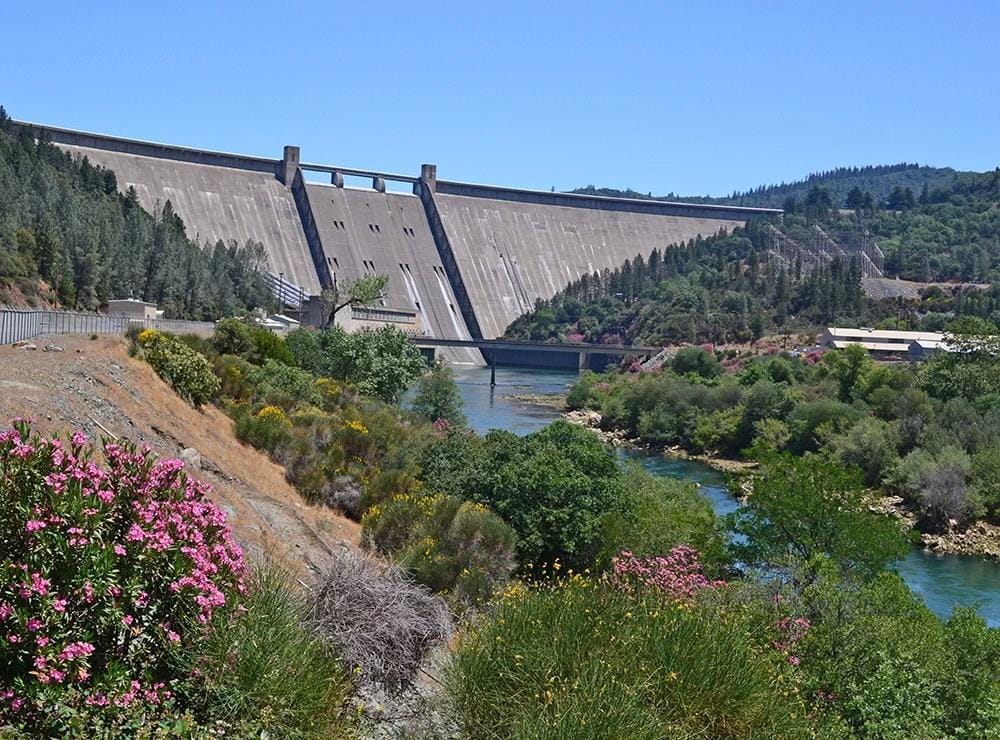
“These fish are being released into drought like conditions in the Sacramento River due to federal constraints on water releases from Shasta Dam,” McManus observed.
”The Bureau of Reclamation has been notified of the need for some water to be released to help these fish, but so far, they aren't budging.”
McManus noted that as of this morning, the upper and mid Sacramento River flow volumes were insufficient to provide suitable cold water conditions for downstream migrating salmon. Key flow measuring stations on the Sacramento showed relatively low flows at a time when the Central Valley and the West is experiencing record high temperatures spurred by climate change.
The releases from Keswick Dam into the Sacramento River at 8:15 am this morning were only 3920 cubic feet per second (cfs). Further downriver, the river at Bend Bridge at 8:15 this morning was flowing at 5910 cfs.
Wilkin’s Slough at 8:15 this morning was 8070 cfs. This river gauge is in the mid Sacramento River, not too far above the city of Sacramento, said McManus.
“The Wilkins Slough number is an important one to forecast juvenile salmon survival. As noted here, that number needs to be near 11,000 cubic feet per second to get decent juvenile salmon survival, and it isn't,” said McManus.
“These fish are in big trouble if the Bureau doesn't relent very soon. With rain on the way next week, it's extra hard to understand how the Bureau can withhold the needed water,” McManus concluded.
GSSA executive director Vance Staplin sent a letter today to the Bureau's acting western regional director, Adam Nickels, calling on him to address this problem by sending higher “pulse” flows into the river.
“I understand your team has already heard from salmon types about the value a pulse flow from Shasta would provide to the over 6 million juvenile salmon just released from the Coleman hatchery,” Staplin wrote. “Flows in the upper river and at Wilkins Slough are nowhere near those needed to ensure even decent survival of this critical group of fish. I don't know what volume of water would be needed to provide a cushion of 11k cfs at Wilkins to get these fish safely downstream, but I'm sure others have already calculated that, or could easily.”
“For the sake of keeping the salmon industry from being forced back into possible closure of the fishery in 2028, we ask you to do whatever is needed to make some water available now from Shasta Lake,” Staplin urged.
I have emailed and called spokespersons for Reclamation’s California-Great Basin Office in Sacramento, but I haven’t received a response yet. When and if they do respond, I will post it here.
“It is incredibly frustrating to see over 6.2 million healthy baby salmon that Coleman National Fish Hatchery worked so hard to produce and release into Battle Creek yesterday fail to receive the support needed from the United States Bureau of Reclamation,” added Staplin. “While Shasta Lake is currently at 116% of historical average, the USBR is currently holding back releases from Lake Shasta into the Sacramento River at flows so low they simulate deadly drought conditions that provide little chance of survival.”
“These little salmon need a pulse flow to push them down the river and so far, pleadings from fishermen and people dependent on these fish for their livelihood have been ignored,”
A healthy salmon fishery provides California with a 1.4 billion dollar industry that supports 23,000 jobs. Considering that rain is forecast for next week, Staplin emphasized that it is “hard to understand why the Bureau won't act to save these fish,” especially after three years when commercial salmon fishing on the ocean has been closed due to similar failures by the agency to release sufficient river flows for juvenile salmon survival.
The NorCal Guides & Sportsmens Association also issued an action alert calling on Reclamation to release higher flows into the Sacramento River.
“The Bureau of Reclamation is allowing our rivers to once again collapse to drought level conditions when all our spring run and fall run juvenile salmon are trying to emigrate to the ocean,” the group wrote. “On top of the natural spawning population, over 6M smolts were released and more this week will face high mortality rates because we still can’t figure out politically how to do what’s right for the salmon species.”
They urged people to send an email to anickels@usbr.gov requesting that they release the pulse flow ASAP, not in April, noting that flows in late March need to stay above 10,000 cfs in Colusa to “give our babies a fighting chance at survival.”
Ironically, the Bureau of Reclamation announced today that it is updating Central Valley Project water supply allocations to reflect current reservoir storage, snowpack, and runoff forecasts.
“These adjustments are intended to provide water users with improved certainty while maintaining flexibility as conditions evolve. Initial allocations for the 2026 water year were announced Feb. 25 and are updated today,” the Bureau said in a statement.
“Hydrologic conditions this year have required careful, real-time management of our water resources,” said Acting Regional Director Adam Nickels. “These modest increases reflect both the improvements from late February storms and the need to remain cautious as we move through the remainder of the water year, especially given the current extended dry period and state of the Sierra snowpack. Our priority remains delivering reliable water supplies while protecting the long-term sustainability of the system.”
So my question to Nickels is: if the water allocations for South of Delta water contractors, including large agribusiness operations, are being increased, why is the Bureau not also releasing pulse flows to get juvenile salmon downstream to the ocean at a time with an improved water supply forecast?