Elk Grove Light Rail Plan to be Approved but Remains 'Aspirational' Without Secured Funding, Raising Possibility of Bus Rapid Transit Instead
The Southeast Connector Joint Powers Authority has argued that mass transit expansions into suburban areas often fail to generate sufficient ridership — a dynamic he has described as a “field of dreams” fallacy
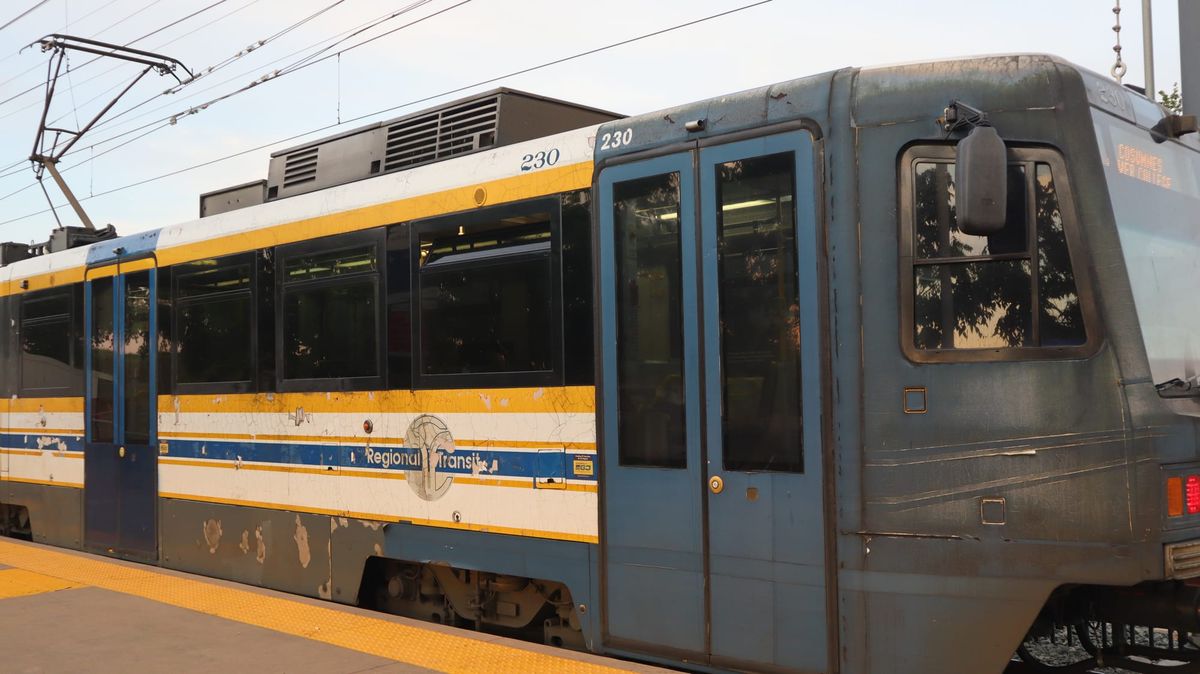
Elk Grove Mayor Bobbie Singh-Allen and her City Council will approve a long-anticipated transit vision on Wednesday night that proposes extending high-capacity light rail service from Sacramento Regional Transit into the city. However, the plan remains aspirational, with no secured funding and a growing likelihood that bus rapid transit could be implemented instead of light rail.
The proposal, outlined in a six-page city staff report presented for the April 22 meeting, recommends approval of the Blue Line/Bus Rapid Transit Implementation Plan, a conceptual roadmap evaluating future transit options along a corridor from Cosumnes River College to Kammerer Road.
While the plan identifies light rail as the preferred long-term outcome, it stops short of committing to construction, funding, or a specific timeline.
City staff emphasizes that the plan is a feasibility-level document and does not authorize any physical project. Approval “does not commit the City to a course of action,” nor does it approve construction or funding, according to the report.
Instead, the document lays out a range of possible scenarios — including full light rail expansion, hybrid systems, and bus rapid transit (BRT) — with implementation dependent on future funding that has yet to be secured.
Light rail preferred, but BRT remains a realistic outcome
The plan evaluates five alternatives, with full light rail service generating the highest projected ridership and strongest public support.
However, a key takeaway is that bus rapid transit — a lower-cost but less desirable option among residents — remains a viable and potentially more achievable outcome.
A BRT-only alternative would run 7.4 miles along the corridor but is projected to attract fewer riders due to longer travel times and required transfers to light rail at Cosumnes River College.
Despite that, the plan acknowledges that the project will likely be built in phases, with initial segments potentially limited in scope depending on available funding — a scenario that could favor BRT or partial buildouts over a full light rail system.
Funding remains uncertain
A central theme of the report is uncertainty around funding.
While the plan identifies potential federal, state, regional and local funding sources, none are currently secured.
“Adoption of the Plan does not commit the City to any specific expenditures,” the report states, adding that implementation will depend on future grant competitiveness and interagency coordination.
The project is expected to cost hundreds of millions — if not billions — of dollars, depending on the final configuration, placing it in competition with other major infrastructure efforts across the Sacramento region.
Regional competition for limited funds
That competition could prove decisive.
Transportation leaders in Sacramento County have increasingly warned that large-scale transit projects face stiff competition for limited and shrinking funding pools.
Derek Minnema, executive director of the Southeast Connector Joint Powers Authority, has argued that mass transit expansions into suburban areas often fail to generate sufficient ridership — a dynamic he has described as a “field of dreams” fallacy.
Minnema and others have pushed for road infrastructure investments instead, contending they serve a broader share of residents and commerce.
Those competing priorities come as federal transportation funding faces uncertainty, particularly during the Trump administration, further straining local agencies’ ability to finance large transit projects.
Long timeline, no immediate construction
Even if approved, Elk Grove’s plan is unlikely to move quickly.
The report outlines a phased implementation strategy, with early segments possibly extending only one to three stations beyond the current light rail terminus, depending on funding availability.
Any future construction would require additional environmental review, design work, and separate approvals.
For now, city officials describe the plan as a necessary step to remain competitive for future funding opportunities — not a guarantee that rail service will arrive.
Community support and political cover
Public outreach shows a clear preference for light rail over bus rapid transit, though concerns remain about traffic, noise, and public safety.
Still, the gap between community expectations and financial realities underscores the central tension of the proposal: while residents favor rail, funding realities may ultimately dictate a different outcome.
As the Elk Grove City Council moves toward approval, the transit plan represents a vision more than a commitment. More importantly, the plan provides political cover for Singh-Allen and two of her councilmen, Rod Brewer and Sergio Robles, who are on the ballot this year and face voter discontent with Elk Grove's growing traffic congestion.